


 Cairo
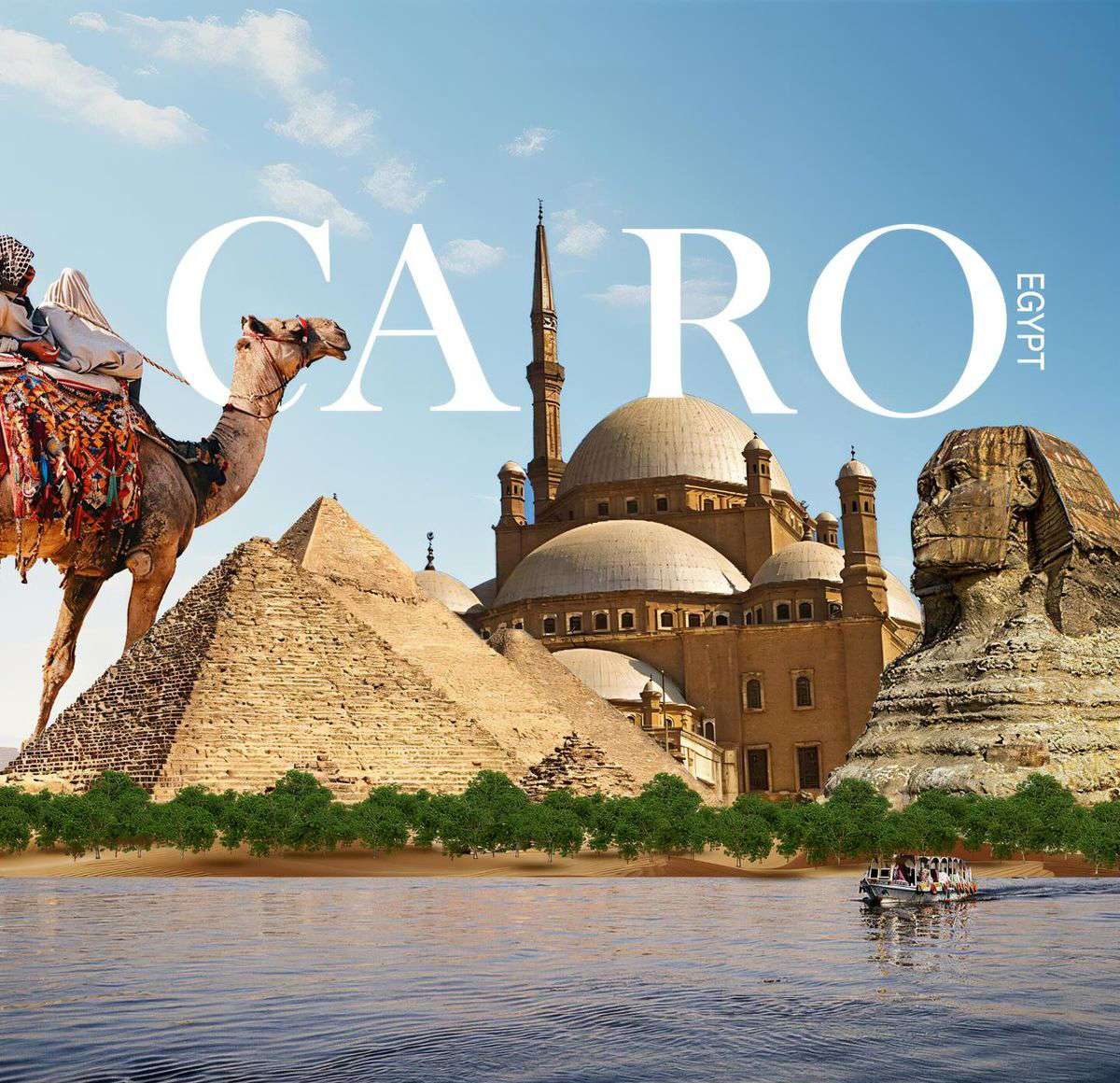
CairoThe desert west of Greater Cairo was once the chosen spot for all the necropolis of Memphis and is a designated UNESCO World Heritage Site overflowing with archaeological sites, wonderous temples, and monumental structures steeped in historical significance. Behold the might of the Giza pyramids and set off on a deep exploration of history from north to south, visiting the beginnings of pyramid construction and marveling at some iconic structures that predate the Great Pyramid in Giza.

The Great Sphinx
This enormous and regal statue distinguishes Khafre’s pyramid complex from all others. It is completely unique. Known as one of the world’s largest sculptures, this incredible statue was carved out of the limestone bedrock and is located beside the Valley Temple leading to King Khafre’s mortuary temple and pyramid. The sphinx was built in a clear demonstration of power, with its face bearing a striking resemblance to the king’s, adorned with a royal headdress on the body of a lion.

Grand Egyptian Museum
Prepare to be blown away by the world’s largest museum, dedicated to one civilization, just a short ride away from the Giza Plateau. This monumental modern museum, devoted to preserving and celebrating ancient Egyptian civilization, is a feat of both engineering and curation, containing 50,000 of ancient Egypt’s prized possessions with state-of-the-art interactive and innovative storytelling. Upon entry, you’ll be greeted by the first obelisk to ever be suspended in mid-air. Make your way through the atrium and marvel at the colossal statue of Ramesses II, which was moved from Cairo’s Ramesses Square, then climb the Grand Staircase flanked by enormous statues of Egypt’s former kings and queens.

Tomb of Meresankh III
If you feel like extending your exploration of the plateau beyond the Pyramids and the Sphinx, there is plenty to see. Stop by the Tomb of Queen Meresankh III, who was most likely the wife of Khafre and granddaughter of Khufu, to see some of the best-preserved wall reliefs on the plateau. These scenes depict an array of activities from everyday life, including bread baking, beer brewing, animal rearing, craft making, and the sculpting of statues.
The Eastern and Western Cemeteries include the tombs of members of the royal family and high-ranking nobles. Most of the tombs in the Eastern Cemetery were intended for the pharaoh’s closest relatives, while the Western Cemetery was reserved for elite noblemen, including Hemiunu, who oversaw the building of the Great Pyramid.

Saqqara
Fancy going even further back into the records of time and seeing something more ancient than the Giza pyramids? A short 20 km drive south of the Giza Plateau, you’ll find one of the oldest and most iconic stone monuments known in history: the Step Pyramid. But that is not all Saqqara has to offer. The necropolis is also home to the vast underground galleries in which the sacred Apis bulls were buried. Saqqara served as an important location for non-royal burials and cult ceremonies for over 3,000 years.
Step Pyramid Complex of Djoser
Built around 120 years before the famous Giza Pyramids, King Djoser’s step pyramid is composed of six stacked layers, thus creating the stepped effect. This early design led to more polished and perfectly triangular-shaped pyramid designs in later dynasties.
The Saqqara pyramid represents the birth of pyramid building and marks an important turning point in ancient Egyptian funerary monuments. Before Djoser’s reign, royal and elite Egyptians were buried in rectangular brick structures called mastabas (Arabic for bench, so called due to their shape) built over the underground tomb.

The Giza Plateau
Settle into your hotel, get some rest, then head to the Giza Plateau for a morning or afternoon of pure exploration! Most people think the three monumental pyramids are all there is to see, but in fact, they’re merely the biggest structures on site. The Giza Plateau is vast and sprawling, full of structures that include the “satellite” pyramids, queens’ pyramids, mastaba tombs for nobility, the worker’s town and tombs, and mortuary temples built to receive offerings for the deceased kings. You can either stroll through the site on foot or catch a ride on a camel or horse-drawn carriage to experience the adventure above ground.

Dahshur
Things did not always go according to plan when it came to pyramid design and building. If you want to check out a surviving faulty design, Dahshur is the place to go. Pharoah Sneferu wanted to top the accomplishment of Djoser’s pyramid in Saqqara but ended up with a broken lined or Bent Pyramid, named as such due to a fault in the engineering design. Determined to get it right after the failure of the Bent Pyramid, Sneferu ordered the construction of a new monumental pyramid a kilometer away.
Although it was originally encased in brilliant limestone, the Red Pyramid gets its name from its currently exposed layer of rust-colored stone. Becoming the blueprint for pyramid building, it is the third-largest Egyptian pyramid after those of Khufu and Khafre, built later in Giza.
Other structures on site include smaller pyramids from the Middle Kingdom that are currently in a state of erosion. The Black Pyramid of King Amenemhat III still stands, but it’s not well-preserved.

The Giza Pyramids
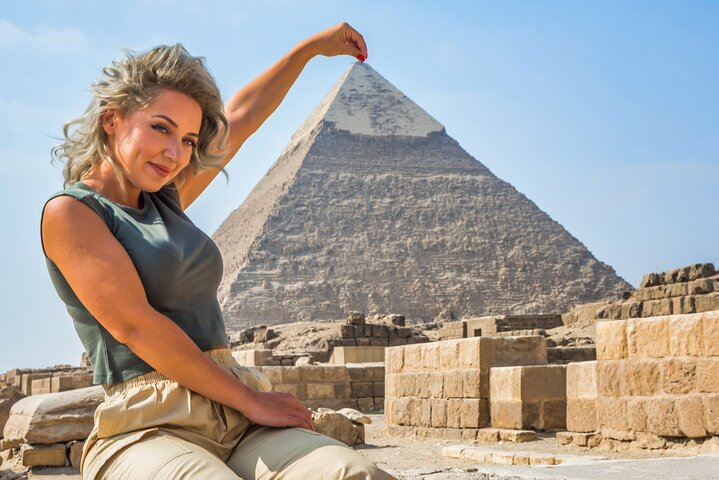
These spectacular and awe-inspiring structures make this patch of land one of the most popular tourist destinations in the world! The Great Pyramid, the last of the Seven Wonders of the Ancient World, was built as the final resting place for Pharaoh Khufu more than 4,500 years ago, while the other two pyramids were built later for his son Khafre and grandson Menkaure. Khufu’s pyramid is both the oldest and largest of the three, but his son Khafre’s appears to be just as tall because he built it on slightly higher ground. Another special feature of Khafre’s pyramid is how well-preserved the top of the pyramid remains with its polished blocks of high-quality limestone that are still intact.
Menkaure’s pyramid is by far the smallest of the three due to the limited amount of space that was left on the Giza Plateau and a more laborious choice of building material. Menkaure chose to quarry granite for the casing of his pyramid, which required transport from 800 km away. Eventually, only the bottom quarter of the casing stones consisted of granite, while limestone was used for the rest.