


 Cairo
CairoCairo’s oldest neighborhoods hold priceless antiquities and historical relics dating back centuries. Plan a walking tour of these incredible neighborhoods in Historic Cairo, a UNESCO World Heritage Site, to transport yourself through time. You can visit sites significant to the Holy Family’s journey through Egypt and view the monuments that are evidence of the country’s rich Islamic history. When Islam arrived to Egypt in 641, a new era was born. Since then, a succession of Muslim rulers and patrons left their mark on Cairo, the chosen seat of power throughout the medieval period, leaving behind stunning pre-modern Islamic architecture, art, and cultural heritage. Visit these sites to catch a glimpse of Egypt’s Islamic heritage.

Al-Muizz
Al-Muizz is a charming pedestrian street and an integral part of a UNESCO World Heritage Site in the heart of Historic Cairo. It’s a must-see because it contains one of the largest clusters of Islamic architecture in the world. The street stretches between the two old gates of Cairo, Bab al-Futuh in the north and Bab Zuweila in the south. It also runs adjacent to Cairo’s famous Khan al-Khalili Bazaar.
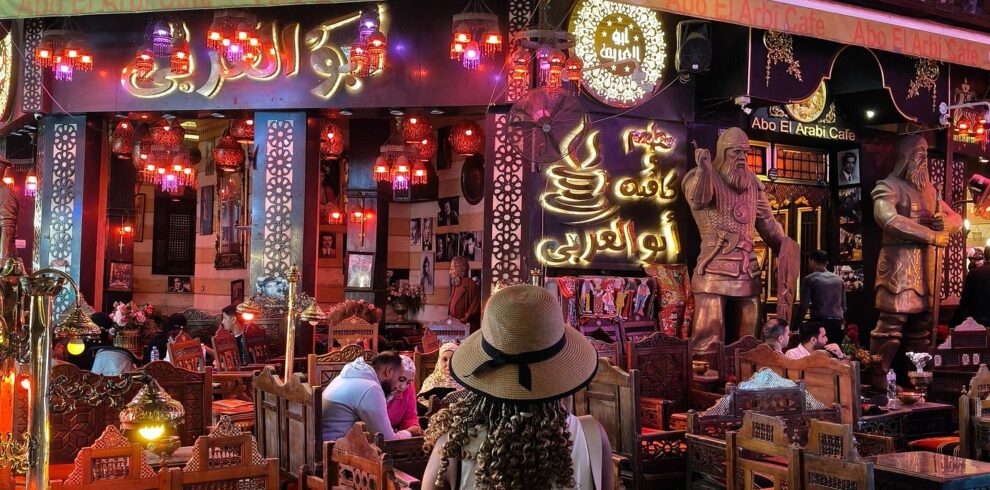
Pass through the monumental Bab Zuweila, the only remaining gate on the south side of Cairo’s medieval city walls with its iconic twin minarets, to enter Al-Muizz Street and wander through large streets and tiny alleyways where you’ll see buildings from the Fatimid Period all the way to the Muhammad Ali dynasty. The ancient alleys and streets are full of shops, spectacular architecture, artisans and craftsmen at work, as well as small traditional cafes and restaurants where you can grab a bite to eat

The Hanging Church
Referred to as Al-Muallaqa or “hanging” in Arabic, this 7th century church gets its name because it’s built on top of the ruins of an old Roman Fortress and remains suspended over its southern gate. A great number of precious icons can be found inside the church, including a series of rich iconography depicting the life and martyrdom of St George and the life of St John the Baptist.

The Cairo Citadel & Citadel Square
One of the most iconic monuments in Historic Cairo, and arguably one of the most impressive defensive fortresses dating back to the Middle Ages, the Citadel has sat proudly on an elevation point on top of the Muqattam Hills for centuries. With a glorious panoramic view of Cairo, visitors can enjoy an unobstructed view of the “City of a Thousand Minarets” and snap dozens of iconic photos.
Insider Tip
- While you’re there, the area surrounding the Citadel also houses several important monuments and places of interest. The construction of the Citadel of Salah al-Din (Saladin) led to the development of the nearby Al-Suyufiyya Street, now home to palaces, mosques, and shrines dating back to the Mamluk Period, Ottoman Period, and Muhammad Ali dynasty.
- While you’re in Muqattam, pay a visit to St Simon the Tanner Monastery, also known as The Cave Church, carved in the Muqattam Mountain. The Coptic Orthodox church is one of the largest churches in the Middle East. This hidden gem has beautifully adorned carvings of stories on the cave walls and can seat up to 20,000 people.

Al-Saliba Street
Take a stroll down Al-Saliba, one of medieval Cairo’s main streets used as a processional path for state celebrations and the gathering place for rulers. Al-Saliba has retained several spots of preserved Islamic architecture, including mosques, schools, sabils (ancient drinking water fountains), khanqas (Sufi gathering locations), hammams (public baths), and palaces.

Al-Fustat (Old Cairo)
Many sites of deep religious and historical importance to the Christian and Islamic faiths. Founded by the Apostle Saint Mark in the early first century, the Egyptian Coptic Orthodox Church is one of the oldest Christian churches in the world. Many of the world’s oldest churches can be found within the protective walls of the old Fortress of Babylon, including the Church of Abu Sirga, built on top of the cave where the Holy Family sought refuge on their journey through Egypt.
Mosque of Amr ibn al-As
The Mosque of Amr ibn al-As in Al-Fustat (the first capital of Egypt under Muslim rule) is one of Cairo’s oldest and most famous Islamic landmarks. Founded in 641 by General Amr ibn al-As, one of the first companions of Prophet Muhammad, this mosque has been expanded and reconstructed many times throughout its long history, but its founding date makes it the oldest surviving mosque in Egypt and Africa still hosting daily prayers.
The Church of Saints Sergius and Bacchus (Abu Sirga)
Founded in the 7th century, this church is considered particularly sacred because it was built on the site of a cave where Joseph, Mary, and the infant Jesus sought shelter. This is the oldest church within the walls of Coptic Cairo and an important landmark on the Holy Family trail. Named in honor of the martyrs Sergius and Bacchus, the church draws religious pilgrims from around the world. Abu Sirga is based on a basilica structure and has some stunning architectural and artistic elements.

The Coptic Museum
Browse the largest and most magnificent collection of Coptic artifacts and art in the world. The Coptic Museum’s collection takes you on a visual journey through Coptic history, from its earliest beginnings in Egypt through to its rise as a powerful base for the Christian faith. At the museum, you will find a wealth of treasures collected and recovered from ancient monasteries and churches across Egypt, including elaborately decorated manuscripts, delicately carved woodwork, and impressive frescos with detailed religious scenes. Visitors will be able to see how Coptic art fuses with the prevalent cultures of Egypt throughout history, including ancient Egyptian, Greek, Roman, Byzantine, and Islamic motifs and designs.

The National Museum of Egyptian Civilization
Make sure to pay a visit to the newly-inaugurated National Museum of Egyptian Civilization (NMEC), the first museum of its kind to showcase the entire history of Egyptian civilization, from prehistory to modern times. The crown jewel of the museum is the Royal Mummies’ Hall, which displays the mummies of the ancient kings and queens of Egypt. Strolling through this exhibit is like walking through the ancient Valley of the Kings in Luxor where most of the mummies were discovered. The magnificent exhibit includes 20 Royal mummies, 18 Kings and two Queens, from the 17th–20th Dynasties.