



 Food & Culture
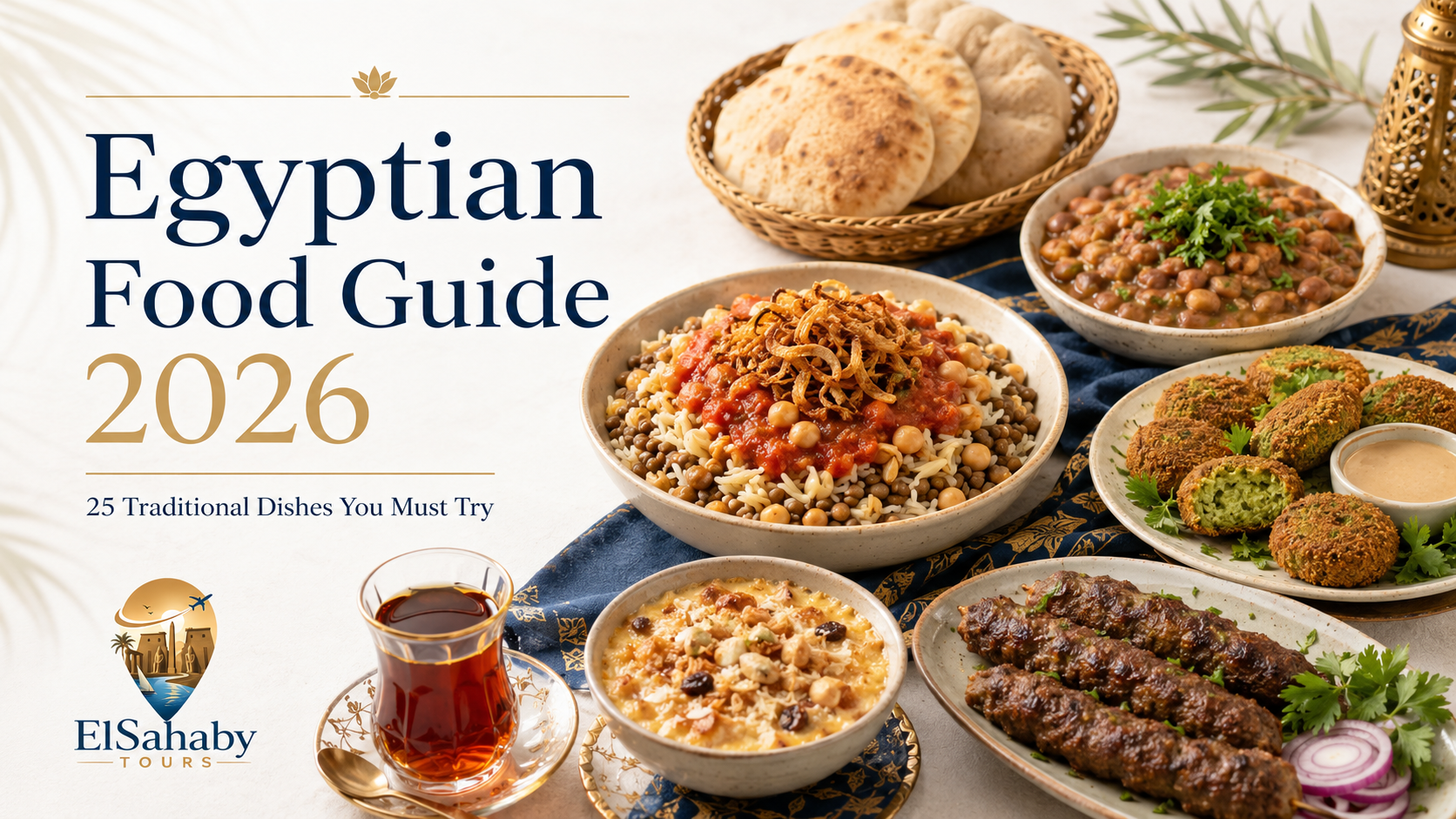
Egypt is famous for its pyramids, temples, royal tombs, Nile cruises, and Red Sea beaches—but food is also one of the most memorable parts of traveling through the country.
Egyptian cuisine reflects the country’s geography, agricultural traditions, religious heritage, Mediterranean connections, and centuries of cultural exchange.
A single journey through Egypt can introduce you to crispy taameya at breakfast, a filling bowl of koshari in Cairo, grilled kofta beside the Nile, fresh seafood in Alexandria or Hurghada, Nubian dishes in Aswan, and warm Om Ali for dessert.
Many traditional Egyptian meals are built around simple local ingredients:
- Fava beans
- Lentils
- Rice
- Pasta
- Egyptian bread
- Tomatoes
- Onions
- Garlic
- Herbs
- Seasonal vegetables
- Grilled meat
- Fresh fish
- Milk and pastry
Egyptian cuisine is particularly attractive for vegetarian and vegan travelers because several of the country’s most famous dishes—such as koshari, ful medames, taameya, lentil soup, and many forms of mahshi—can be prepared without meat.
Egypt’s official tourism platform highlights the country’s broad range of traditional breakfasts, street foods, vegetarian recipes, grilled dishes, seafood, desserts, and regional specialties. It specifically presents taameya, ful medames, Egyptian flatbread, koshari, mahshi, molokhia, kofta, kebab, rice pudding, and Om Ali as central parts of Egyptian gastronomy.
This complete Egyptian food guide explains:
- The 25 traditional dishes you should try
- What Egyptians eat for breakfast
- The best Egyptian street food
- Vegetarian and vegan options
- Egyptian desserts and drinks
- Regional dishes in Cairo, Alexandria, Luxor, Aswan, and the Red Sea
- How much food costs
- Food-safety advice
- Dining etiquette
- Useful Arabic phrases
- How to include food experiences in your Egypt itinerary
Egyptian Food at a Glance
| Food Experience | Best Choices |
|---|---|
| Most famous Egyptian meal | Koshari |
| Classic Egyptian breakfast | Ful medames and taameya |
| Best vegetarian dishes | Koshari, taameya, ful, lentil soup, mahshi |
| Best grilled food | Kofta and kebab |
| Best traditional soup | Molokhia or lentil soup |
| Best Egyptian bread | Eish baladi |
| Best street-food sandwich | Taameya or Alexandrian liver |
| Best coastal food | Grilled fish and seafood |
| Best Egyptian dessert | Om Ali |
| Best sweet pastry | Konafa or basbousa |
| Best traditional drink | Karkade |
| Best drink in summer | Fresh mango, lemon-mint, or sugarcane juice |
| Best place for seafood | Alexandria and Red Sea destinations |
| Best place for Nubian food | Aswan |
| Best city for food variety | Cairo |
| Best dining approach | Mix local restaurants, street food, and quality hotel dining |
What Makes Egyptian Cuisine Special?
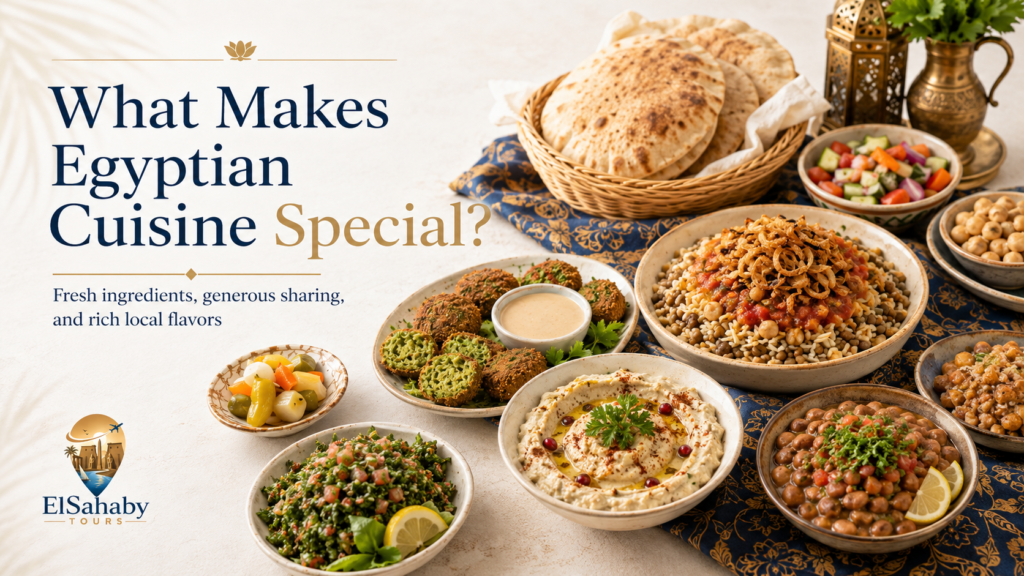
Egyptian cuisine is comforting, filling, and strongly connected with everyday life.
Rather than relying heavily on complicated presentation, many dishes focus on slow cooking, fresh bread, aromatic garlic, cumin, coriander, tomato sauce, legumes, and grilled ingredients.
Food is also an important social experience in Egypt.
Families and friends frequently share several dishes at the table rather than ordering one individual plate each. Bread may be used to scoop dips, vegetables, beans, and sauces, while small salads and side dishes are placed in the center.
Key Characteristics of Egyptian Food
Egyptian cuisine is generally:
- Rich in legumes and vegetables
- Suitable for sharing
- Flavorful without always being extremely spicy
- Dependent on fresh bread
- Influenced by regional ingredients
- Available in both inexpensive and luxury settings
- Friendly to vegetarian travelers
- Closely connected with celebrations and family gatherings
Is Egyptian Food Spicy?
Most Egyptian food is seasoned rather than extremely hot.
Common flavors include:
- Cumin
- Garlic
- Coriander
- Black pepper
- Chili
- Vinegar
- Lemon
- Dill
- Parsley
- Cardamom
- Cinnamon
Some sauces and street-food dishes can be spicy, but travelers can usually request less chili.
Is Egyptian Food Similar Everywhere?
No. Regional differences are important.
Cairo is known for koshari, street sandwiches, grills, and enormous restaurant variety.
Alexandria is famous for seafood and spicy Alexandrian liver.
Upper Egypt has its own breads, slow-cooked dishes, and rural traditions.
Aswan offers Nubian food and strong connections with local spices and hospitality.
The Red Sea combines Egyptian cuisine with fresh seafood and international resort dining.
25 Traditional Egyptian Dishes You Must Try
1. Koshari
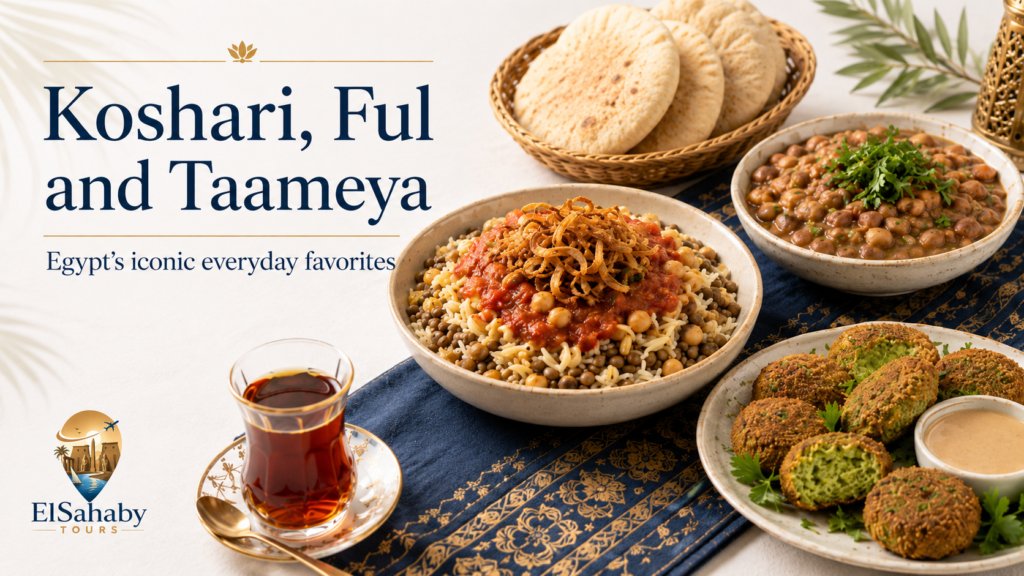
Koshari is one of Egypt’s most famous and affordable meals.
The dish typically combines:
- Rice
- Lentils
- Pasta
- Chickpeas
- Tomato sauce
- Fried onions
- Garlic-vinegar sauce
- Optional chili sauce
The ingredients may sound unusual together, but the combination creates a rich mixture of textures and flavors.
Koshari is widely eaten by students, workers, families, and travelers. It is filling, inexpensive, and usually vegetarian or vegan when prepared traditionally.
Egypt’s official tourism platform describes koshari as one of Egypt’s national dishes and highlights its combination of lentils, pasta, rice, chickpeas, tomato sauce, and crispy fried onions.
How to Eat Koshari
Start with the tomato sauce, then add small amounts of garlic vinegar and chili according to your preference.
Do not pour all the chili sauce over the dish immediately unless you already know how spicy it is.
Where to Try It
Koshari is available throughout Egypt, but Cairo has the greatest selection of dedicated koshari restaurants.
2. Ful Medames
Ful medames is one of Egypt’s classic breakfast foods.
It consists of slowly cooked fava beans seasoned according to the restaurant or household recipe.
Possible additions include:
- Olive oil
- Lemon
- Cumin
- Garlic
- Tomatoes
- Parsley
- Tahini
- Chili
- Boiled eggs
Ful is usually eaten with warm eish baladi.
The dish is inexpensive, nutritious, filling, and widely available.
Egypt’s official tourism guidance presents ful medames as a central part of the traditional Egyptian breakfast.
Best Time to Eat Ful
Ful is commonly eaten at breakfast, but it is available throughout the day.
Vegetarian Status
Traditional ful is usually vegetarian and can easily be vegan, but confirm whether butter, eggs, or other toppings have been added.
3. Egyptian Taameya
Taameya is Egypt’s version of falafel.
Unlike many Levantine falafel recipes made mainly from chickpeas, Egyptian taameya is traditionally prepared from crushed fava beans mixed with herbs and spices.
It is shaped into small patties and fried until crisp.
Taameya may be served:
- Inside Egyptian bread
- With salad
- With tahini
- With pickles
- Alongside ful
- As part of a breakfast spread
The official Experience Egypt gastronomy guide specifically distinguishes Egyptian taameya by noting that it is made from fava beans.
Why You Should Try It
Freshly fried taameya has a crispy exterior and a soft, green, herb-filled interior.
It is one of the best inexpensive vegetarian foods in Egypt.
4. Eish Baladi
Eish baladi is Egypt’s traditional local flatbread.
The word “eish” also means “life” in Egyptian Arabic, reflecting the importance of bread in Egyptian daily life.
It is usually made from wheat flour and baked at high temperatures, creating a pocket similar to pita bread.
Eish baladi is served with:
- Ful
- Taameya
- Cheese
- Tahini
- Baba ghanoush
- Grilled meat
- Mahshi
- Molokhia
- Almost every traditional Egyptian meal
Egypt’s official tourism guide includes eish baladi among the essential elements of an Egyptian breakfast.
Local Dining Tip
Do not be surprised when bread arrives automatically at the table. In many local restaurants, it functions as both food and a practical way to scoop dips and shared dishes.
5. Molokhia
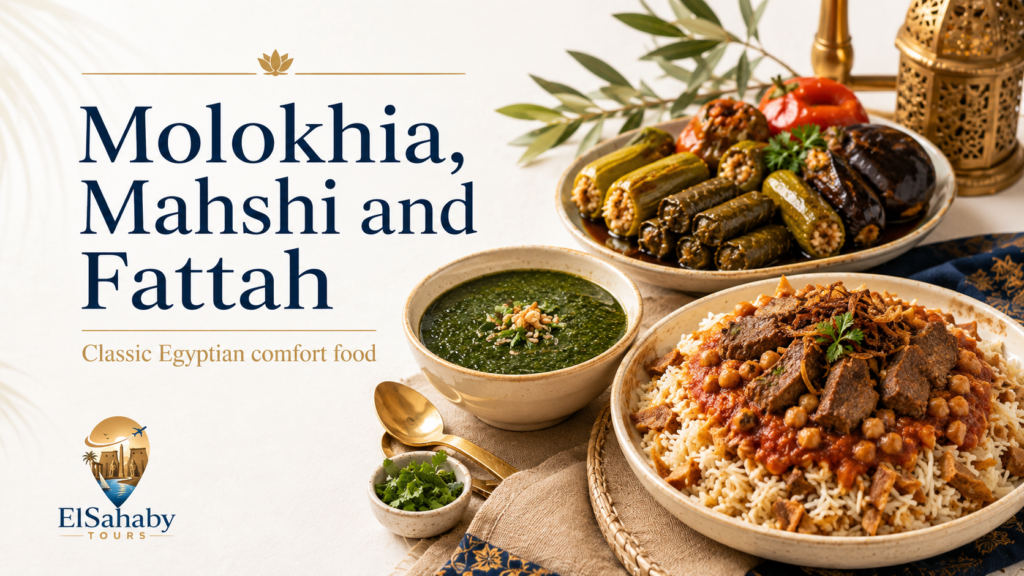
Molokhia is a green soup or sauce made from finely chopped leaves of the molokhia plant.
It is traditionally flavored with:
- Garlic
- Coriander
- Stock
- Sometimes butter or ghee
Molokhia may be served with:
- Rice
- Bread
- Chicken
- Rabbit
- Meat
- Seafood in some coastal regions
The texture can be unfamiliar to first-time visitors, but the garlic and coriander provide a distinctive flavor.
Egypt’s official tourism platform describes molokhia as one of the country’s best-known traditional dishes.
Is Molokhia Vegetarian?
Not always.
Even when no meat appears on the plate, the soup may be cooked with chicken or meat stock. Vegetarian travelers should ask how it was prepared.
6. Mahshi
Mahshi refers to vegetables stuffed with a seasoned rice mixture.
Common vegetables include:
- Vine leaves
- Zucchini
- Eggplant
- Bell peppers
- Cabbage
- Tomatoes
- Onions
The rice filling may include:
- Tomato
- Parsley
- Dill
- Coriander
- Spices
- Onion
- Sometimes minced meat
Mahshi can be served as a main dish, side dish, or part of a larger family meal.
Official Egyptian tourism information lists mahshi among the country’s traditional dinner choices.
Vegetarian Advice
Ask whether the mahshi was cooked with meat stock or contains minced meat.
Many versions are fully vegetarian, but recipes differ.
7. Fattah
Egyptian fattah is a rich celebratory dish commonly associated with family gatherings, religious holidays, and special occasions.
It usually contains layers of:
- Rice
- Crispy or toasted bread
- Garlic-vinegar sauce
- Tomato sauce
- Meat and broth
The dish is filling and strongly flavored.
When to Try It
Fattah is best enjoyed at a trusted traditional restaurant or as part of a carefully arranged local meal.
Because it is heavy, it may be better for lunch or dinner rather than before a long sightseeing tour.
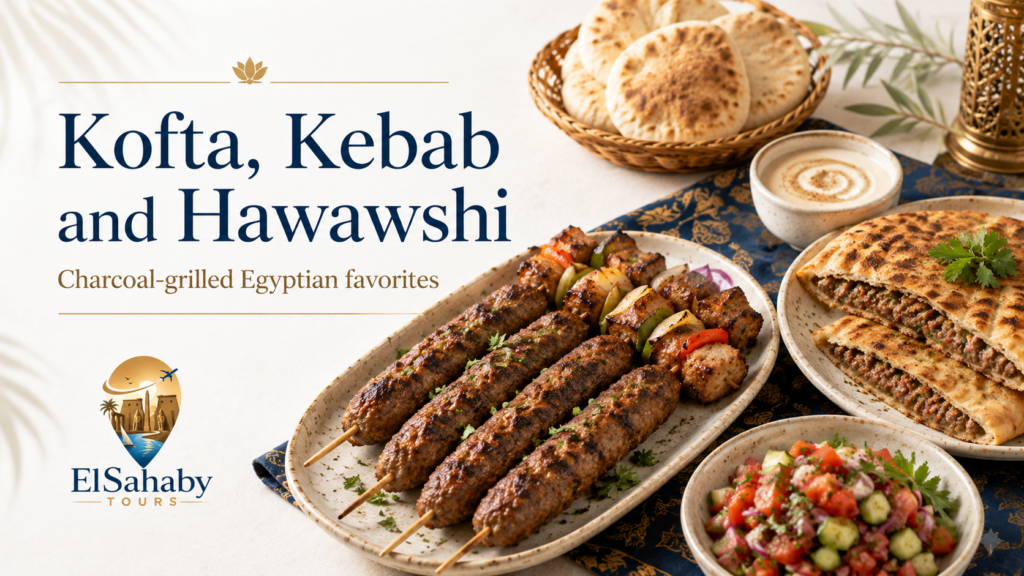
8. Kofta
Egyptian kofta is prepared from seasoned minced meat, commonly beef, lamb, or a mixture.
It is shaped around skewers or into long pieces and grilled over charcoal.
Kofta is usually served with:
- Egyptian bread
- Rice
- Tahini
- Salad
- Pickles
- Grilled vegetables
The smell of charcoal-grilled kofta is a familiar feature of many Egyptian restaurants.
Official tourism information presents kofta and kebab among Egypt’s classic grilled dinner dishes.
Ordering Advice
Ask whether the dish comes with rice, bread, salad, and tahini, as inclusions vary between restaurants.
9. Kebab
In Egypt, kebab usually refers to pieces of seasoned meat grilled over charcoal.
It may be prepared with:
- Lamb
- Beef
- Veal
Kebab is often ordered together with kofta as a mixed grill.
Best Experience
A traditional grill restaurant may serve the meal with several small dishes, including tahini, baba ghanoush, tomato salad, pickles, and warm bread.
10. Hawawshi
Hawawshi is a popular Egyptian meat-filled bread.
Seasoned minced meat is placed inside bread and baked or grilled until the exterior becomes crisp and the filling is fully cooked.
The meat may be flavored with:
- Onion
- Pepper
- Chili
- Parsley
- Cumin
- Other spices
Hawawshi can range from mildly seasoned to extremely spicy.
Where to Eat Hawawshi
Choose a busy, reputable restaurant where the bread is prepared fresh and the meat is cooked thoroughly.
Vegetarian Alternative
Some modern restaurants offer cheese or vegetable-filled versions, although these are not the traditional recipe.
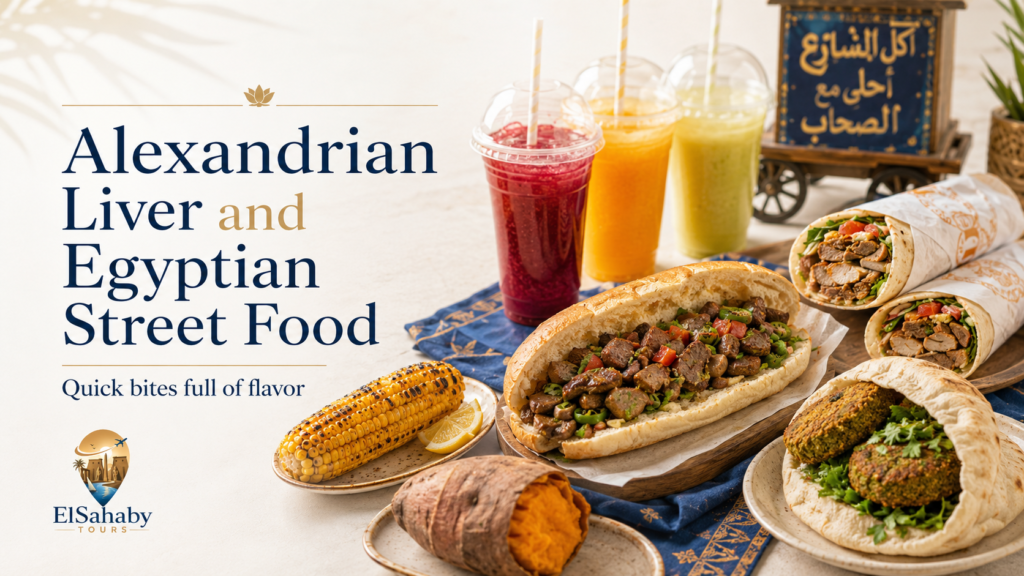
11. Alexandrian Liver Sandwich
Kebda Iskandarani, or Alexandrian liver, is one of Egypt’s most recognizable street-food sandwiches.
Thin pieces of liver are cooked with:
- Garlic
- Cumin
- Chili
- Vinegar
- Peppers
- Lemon
The mixture is served inside bread.
Experience Egypt identifies spicy liver sandwiches as a specialty associated with Alexandria.
Is It Very Spicy?
It can be.
Ask for less chili when you prefer a milder sandwich.
Where to Try It
Alexandria is the traditional home of the dish, but it is widely available in Cairo and other cities.
12. Shawarma
Shawarma is not exclusively Egyptian, but it is deeply integrated into Egypt’s modern food scene.
Chicken or meat is cooked on a vertical rotating spit, sliced thinly, and served in bread with sauces and vegetables.
Egyptian-style shawarma may include:
- Tahini
- Garlic sauce
- Tomatoes
- Parsley
- Pickles
- Onions
Shawarma is an easy choice for travelers who want a quick meal between tours.
Safety Tip
Choose a busy restaurant with high turnover and meat that is visibly cooked thoroughly.
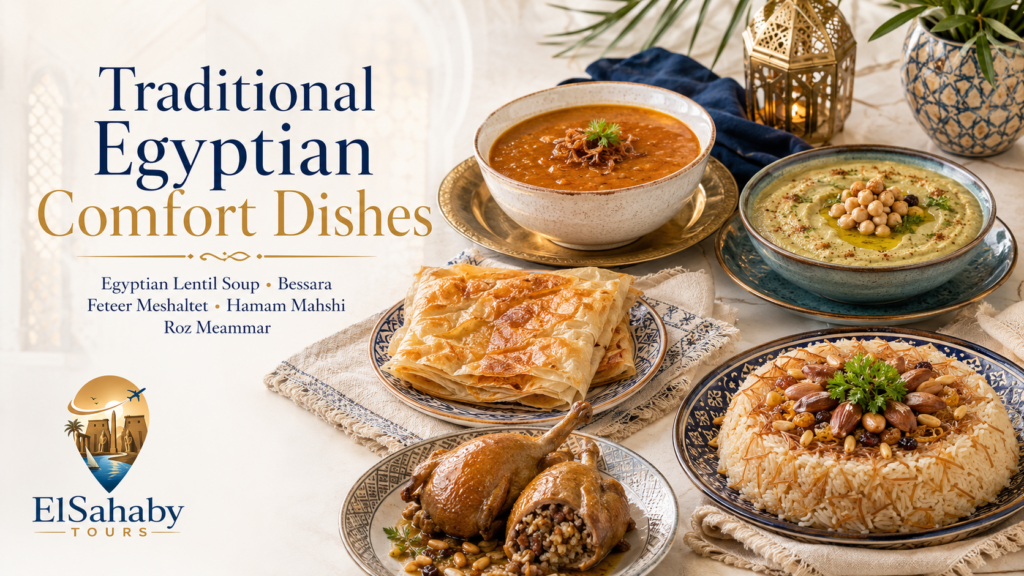
13. Egyptian Lentil Soup
Lentil soup is especially popular during cooler weather and Ramadan.
It is usually prepared with:
- Red or yellow lentils
- Onion
- Carrot
- Tomato
- Cumin
- Stock
The soup is often blended until smooth and served with toasted bread or lemon.
Vegetarian Advice
Ask whether the soup was made with vegetable, chicken, or meat stock.
Best Time to Try It
Lentil soup is a comforting choice during winter evenings or after a long day of sightseeing.
14. Bessara
Bessara is a traditional green fava-bean puree flavored with herbs.
Recipes may include:
- Dried fava beans
- Coriander
- Parsley
- Dill
- Garlic
- Onion
- Cumin
It may be served warm or at room temperature with bread and fried onions.
Bessara is less internationally famous than koshari or taameya, making it an excellent dish for travelers who want to try something more local.
Is Bessara Vegan?
Many traditional versions are vegan, but preparation methods vary.
15. Feteer Meshaltet
Feteer meshaltet is a layered Egyptian pastry made by repeatedly folding dough with butter or ghee.
The result is flaky, rich, and somewhere between bread and pastry.
Feteer may be served with:
- Honey
- Molasses
- Cream
- Cheese
- Sugar
- Savory fillings
Egypt’s official tourism platform highlights feteer as a characteristic Egyptian food experience, particularly in rural settings such as Fayoum.
Best Way to Try It
Share one feteer between several people, especially when ordering additional toppings.
It can be heavier than it appears.
16. Hamam Mahshi
Hamam mahshi is stuffed pigeon, a traditional dish often prepared for special meals.
The pigeon is commonly filled with:
- Freekeh
- Rice
- Herbs
- Spices
The official Experience Egypt culture guide identifies hamam mahshi as an Egyptian classic that is traditionally stuffed with freekeh.
What Does It Taste Like?
The meat is darker and richer than chicken.
Is It Easy to Eat?
Pigeon contains many small bones, so eat slowly and carefully.
17. Roz Meammar
Roz meammar is an Egyptian baked rice dish.
Rice is cooked in a clay or oven dish with milk, cream, butter, or ghee until it develops a rich, golden surface.
It may be served with:
- Chicken
- Meat
- Duck
- Other traditional dishes
The dish is creamy and filling.
Best For
Travelers who enjoy baked rice, dairy-rich dishes, and traditional home-style cooking.
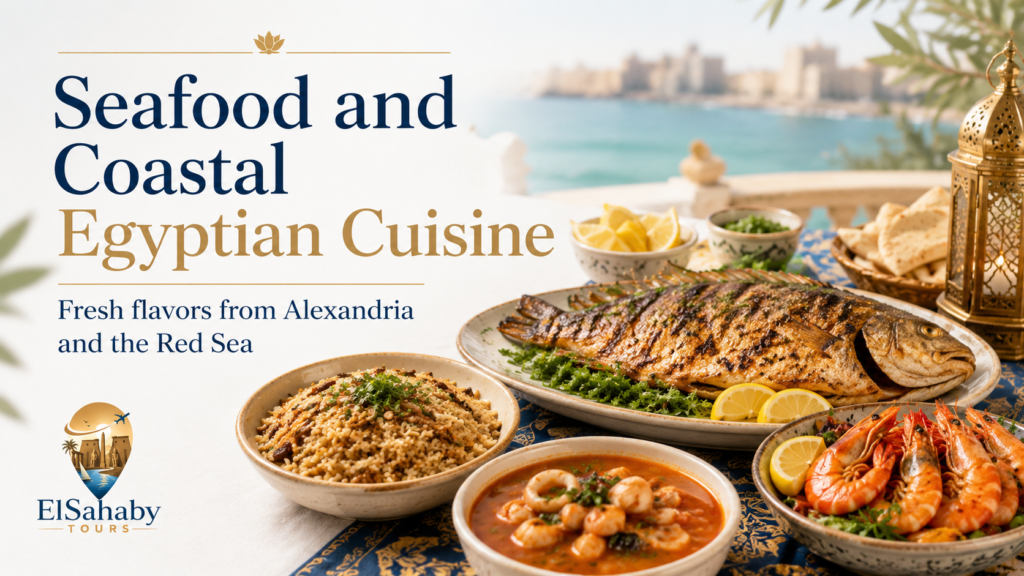
18. Sayadeya Fish
Sayadeya is a traditional fish and rice dish strongly associated with Egypt’s coastal cities.
It often includes:
- Fish
- Seasoned brown rice
- Caramelized onions
- Tomato
- Spices
- Fish stock
Recipes differ between Alexandria, Port Said, the Red Sea, and individual households.
Where to Try It
- Alexandria
- Port Said
- Hurghada
- Red Sea coastal restaurants
Choose a restaurant known for fresh seafood rather than selecting only by price.
19. Grilled Egyptian Fish
Grilled fish is one of the best meals to try in Alexandria and along the Red Sea.
Depending on availability, restaurants may display fresh fish and allow guests to choose by weight.
The preparation may include:
- Grilling
- Frying
- Baking
- Spiced rice
- Tahini
- Salads
- Bread
Before Ordering
Confirm:
- Price per kilogram
- Approximate weight
- Preparation method
- Side dishes
- Service or cooking charges
Red Sea Dining
Seafood can be a rewarding addition to a Red Sea holiday alongside snorkeling, island trips, or resort relaxation. Read the Elsahaby Tours Red Sea island guide for more ideas about coastal experiences.
20. Baba Ghanoush
Baba ghanoush is a smoky eggplant dip.
It is typically made with:
- Roasted eggplant
- Tahini
- Lemon
- Garlic
- Oil
- Seasoning
It is served with bread and often appears alongside grilled meat.
Vegetarian Status
It is commonly vegetarian or vegan, but confirm whether yogurt has been included.
21. Tahini
Tahini is a sesame-based sauce served throughout Egypt.
It commonly accompanies:
- Kofta
- Kebab
- Fish
- Taameya
- Bread
- Salads
- Shawarma
Egyptian tahini sauce may be mixed with:
- Water
- Lemon
- Vinegar
- Garlic
- Cumin
Do not confuse plain sesame paste with the finished restaurant sauce, which is usually lighter and seasoned.
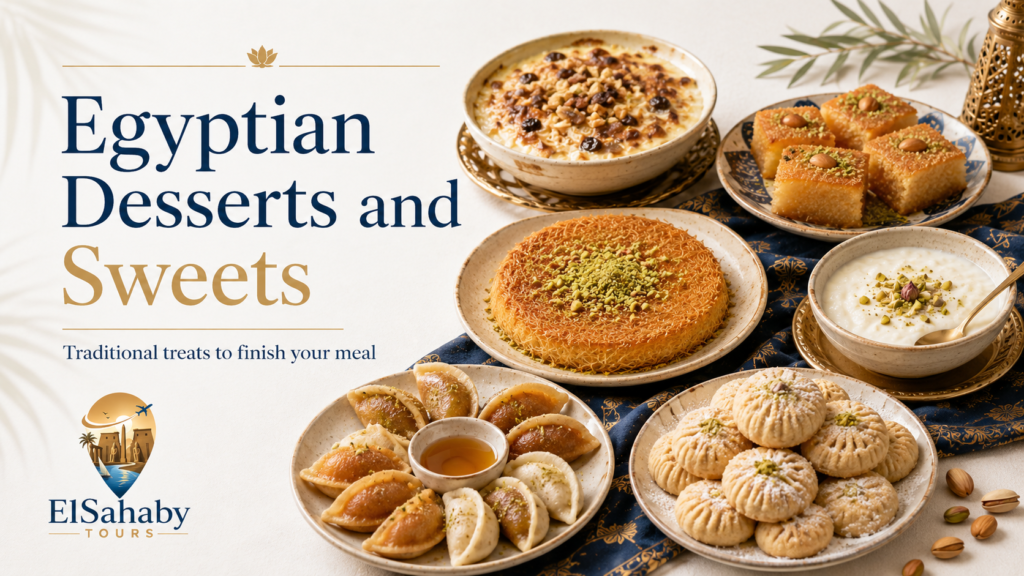
22. Om Ali
Om Ali is one of Egypt’s most famous desserts.
Pieces of bread or pastry are baked with:
- Milk
- Sugar
- Cream
- Nuts
- Raisins
- Coconut
It is normally served warm.
Egypt’s official gastronomy guide describes Om Ali as a traditional baked dessert made from bread or pastry soaked in milk and sugar and topped with ingredients such as coconut, raisins, and pistachios.
Why You Should Try It
It is warm, rich, comforting, and ideal for sharing after dinner.
23. Basbousa
Basbousa is a sweet semolina cake soaked in syrup.
It may be topped with:
- Almonds
- Hazelnuts
- Coconut
- Cream
The texture is soft, moist, and dense.
Serving Advice
Basbousa is very sweet. Start with a small piece, particularly when trying several desserts.
24. Konafa
Konafa is made from fine shredded pastry combined with syrup and a filling.
Possible fillings include:
- Cream
- Cheese
- Nuts
- Mango
- Chocolate in modern versions
Konafa becomes particularly popular during Ramadan, although it is available throughout much of the year.
Traditional or Modern?
Try a classic cream or nut version first before exploring modern flavors.
25. Roz Bel Laban
Roz bel laban is Egyptian rice pudding.
It is generally made with:
- Rice
- Milk
- Sugar
- Vanilla
- Optional cream
- Nuts
- Cinnamon
- Ice cream in some restaurants
The official Egyptian gastronomy guide includes rice pudding among the country’s popular desserts.
Best For
Travelers who want a familiar, gentle dessert after a spicy or heavy meal.
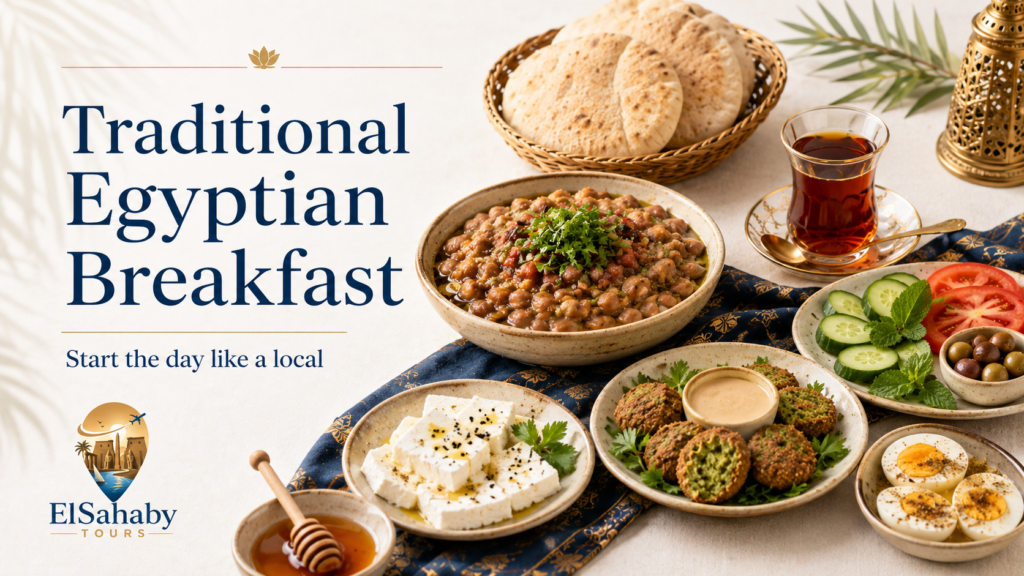
Traditional Egyptian Breakfast
Egyptian breakfast can be one of the best meals of the day.
A traditional breakfast spread may include:
- Ful medames
- Taameya
- Eish baladi
- White cheese
- Roumy cheese
- Tomatoes
- Cucumbers
- Pickles
- Eggs
- Honey
- Molasses
- Tea
Official Egyptian tourism guidance highlights taameya, ful medames, Domiati white cheese, Roumy cheese, and eish baladi as key elements of a traditional breakfast.
Hotel Breakfast or Local Breakfast?
Hotel breakfast offers convenience, familiar choices, and controlled food handling.
A local breakfast provides:
- Better cultural immersion
- Fresher taameya
- Lower prices
- More authentic ful
- A chance to observe everyday Egyptian life
The best approach is to try both.
What Should First-Time Visitors Order?
For two people, consider ordering:
- One ful
- One plate of taameya
- White cheese
- Salad
- Bread
- Tea
This provides enough variety without ordering too much.
Best Egyptian Street Food
Egyptian street food is affordable, quick, and deeply connected with daily life.
Popular options include:
- Koshari
- Taameya sandwiches
- Ful sandwiches
- Hawawshi
- Alexandrian liver
- Sausage sandwiches
- Shawarma
- Sweet potatoes
- Roasted corn
- Fresh juice
How to Choose a Street-Food Vendor
Look for:
- A busy location
- High customer turnover
- Food cooked in front of you
- Clean utensils
- Ingredients protected from dust
- Proper refrigeration where required
- Meat cooked thoroughly
- Local families eating there
Avoid food that appears to have remained uncovered or warm for a long period.
Elsahaby Local Tip: The busiest stall is often a better choice than the empty stall with the most attractive sign.
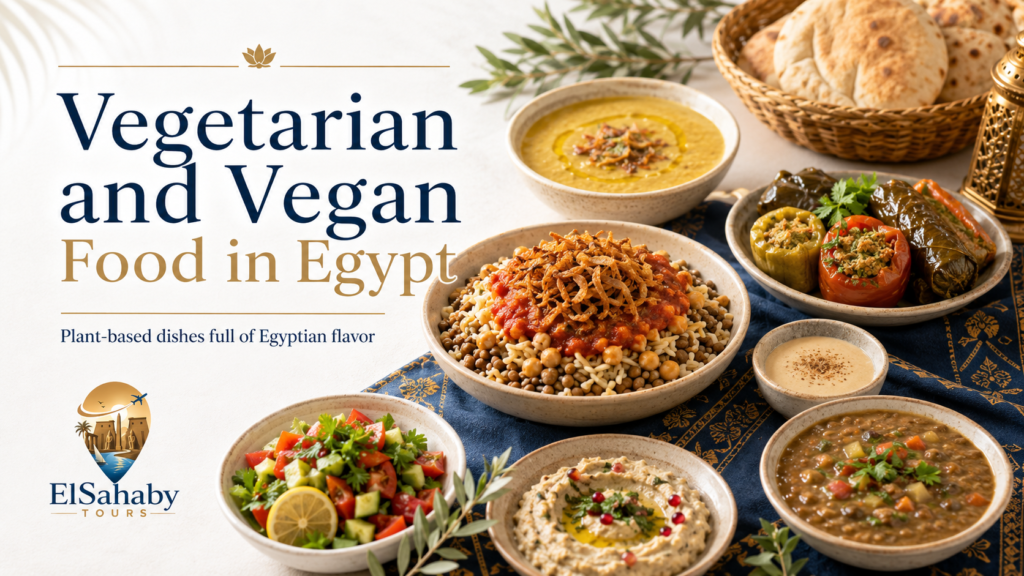
Vegetarian and Vegan Food in Egypt
Egypt can be an excellent destination for vegetarian travelers.
Many everyday Egyptian foods are naturally plant-based.
Common Vegetarian Options
- Koshari
- Taameya
- Ful medames
- Bessara
- Lentil soup
- Mahshi
- Baba ghanoush
- Tahini
- Salads
- Vegetable tagines
- Eish baladi
- Feteer with suitable fillings
Egypt’s official tourism platform notes that Egyptian cuisine contains many vegan and pescatarian recipes developed over generations.
Important Questions to Ask
Even when a dish appears vegetarian, ask whether it contains:
- Meat stock
- Chicken stock
- Butter
- Ghee
- Eggs
- Milk
- Yogurt
- Hidden meat filling
Useful Arabic Phrases
I am vegetarian:
Ana nabati / Ana nabateya.
No meat:
Min gheir lahma.
No chicken:
Min gheir ferakh.
No fish:
Min gheir samak.
Is there meat stock?
Fee shorbet lahma?
Without butter or ghee:
Min gheir zebda aw samna.
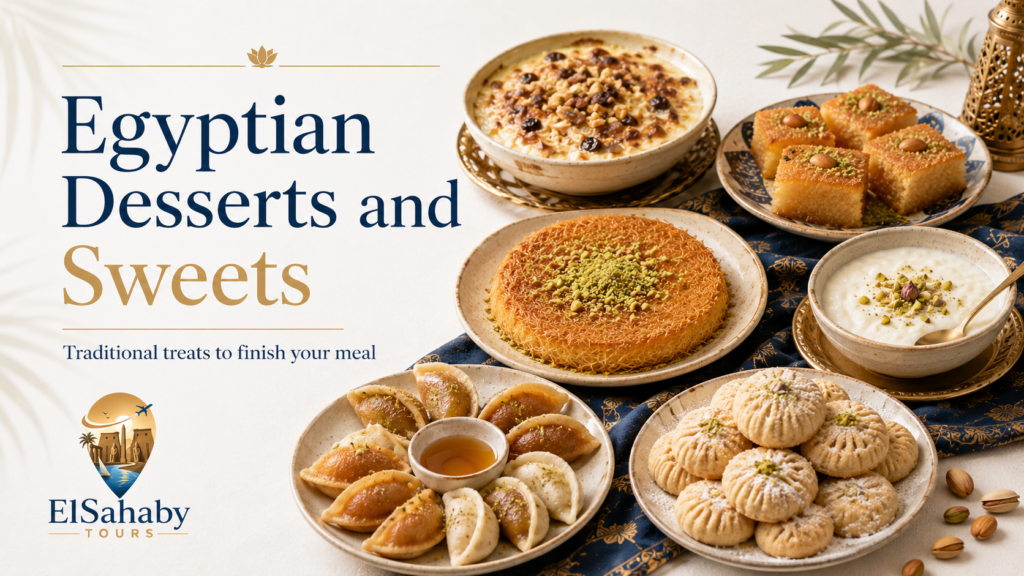
Egyptian Desserts and Sweets
Egyptian desserts are generally sweet, rich, and designed for sharing.
Popular choices include:
- Om Ali
- Basbousa
- Konafa
- Roz bel laban
- Baklava
- Zalabya
- Meshabek
- Kahk
- Qatayef
- Sweet feteer
Ramadan Desserts
During Ramadan, dessert shops and restaurants often offer a larger selection of:
- Konafa
- Qatayef
- Basbousa
- Atayef fillings
- Dried-fruit drinks
- Seasonal sweets
Ramadan can be a rewarding period for experiencing Egyptian hospitality and evening dining when schedules are planned carefully. Read the Best Time to Visit Egypt in 2026 guide for seasonal planning.
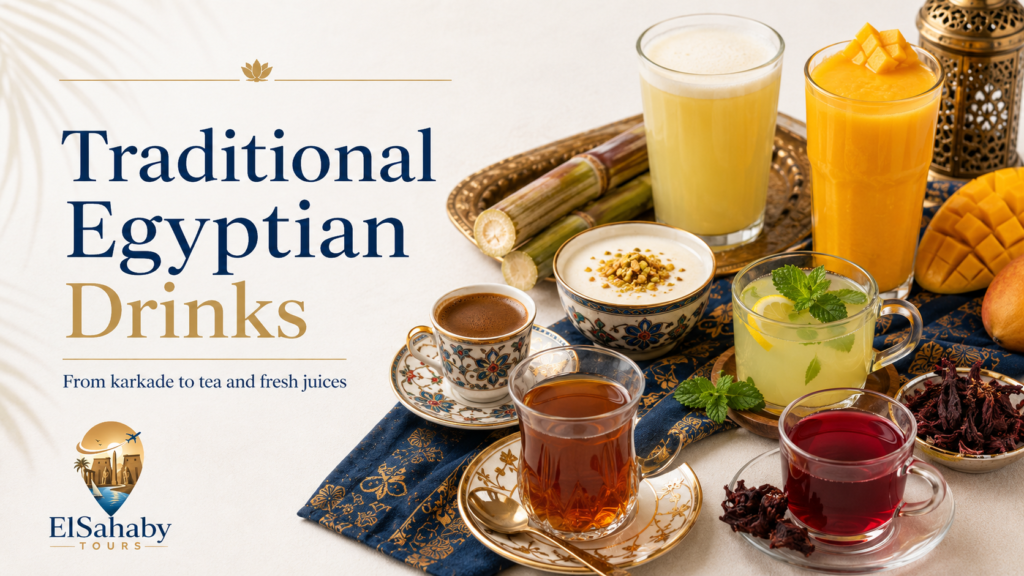
Traditional Egyptian Drinks
Egyptian Tea
Tea is consumed throughout the day.
It may be served:
- Black
- With sugar
- With mint
- With milk in some settings
Egyptian tea can be strong and sweet, so request less sugar when preferred.
Turkish-Style Coffee
Egyptian coffee is commonly prepared in a small pot and served unfiltered.
Ask for your preferred sugar level before it is prepared.
Common requests include:
- No sugar
- Little sugar
- Medium sugar
- Sweet
Karkade
Karkade is a hibiscus drink served hot or cold.
It has a deep red color and a tart flavor, although restaurants may add a large amount of sugar.
Sugarcane Juice
Fresh sugarcane juice is widely available.
It is naturally sweet and usually served cold.
Choose a busy, clean juice shop.
Sahlab
Sahlab is a warm, thick milk-based drink popular during cooler months.
It may be topped with:
- Cinnamon
- Coconut
- Nuts
- Raisins
Lemon-Mint Juice
Lemon and mint blended with water, ice, and sugar is one of the most refreshing drinks during hot weather.
Fresh Mango Juice
Mango juice is particularly popular during mango season and at juice shops throughout Egypt.
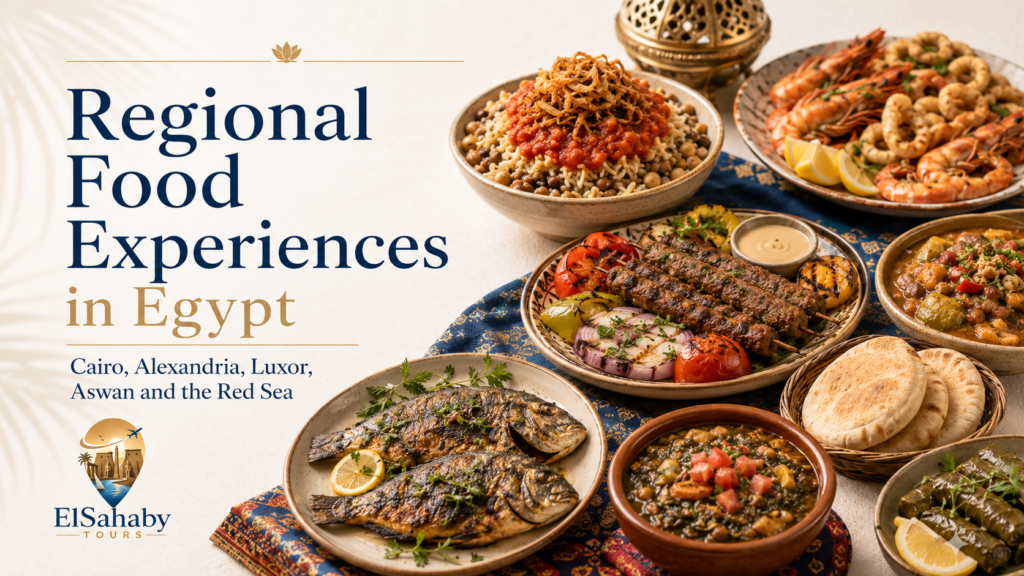
Regional Food Experiences in Egypt
What to Eat in Cairo
Cairo offers the widest selection of traditional and modern Egyptian food.
Try:
- Koshari
- Taameya
- Ful
- Hawawshi
- Kofta
- Kebab
- Molokhia
- Om Ali
- Modern Egyptian fine dining
Combine food experiences with sightseeing in Cairo, including the Pyramids, Historic Cairo, and Khan El Khalili.
What to Eat in Alexandria
Alexandria is strongly associated with:
- Fresh seafood
- Sayadeya
- Alexandrian liver
- Grilled fish
- Shrimp
- Calamari
- Coastal desserts and cafés
Ask to see the fish, confirm its weight, and agree on the price before preparation.
What to Eat in Luxor
Luxor offers:
- Grilled meat
- Molokhia
- Mahshi
- Traditional bread
- Rural-style meals
- Nile-view restaurants
- Nubian and Upper Egyptian influences
Some private Luxor tours can be upgraded to include a local Egyptian lunch, as shown on the Luxor East and West Banks tour.
What to Eat in Aswan
Aswan is the best destination for exploring Nubian hospitality and southern Egyptian flavors.
Look for:
- Nubian bread
- Local spices
- Grilled chicken
- Fish
- Rice dishes
- Lentils
- Traditional tea
- Home-style meals
Choose a respectful cultural experience that supports local families rather than a rushed commercial stop.
What to Eat at the Red Sea
Red Sea destinations offer:
- Fresh fish
- Shrimp
- Calamari
- Seafood soup
- Grilled seafood platters
- Egyptian grills
- International resort dining
A Red Sea stay can combine local food with beaches, snorkeling, private boats, and island experiences. Explore options through the Elsahaby Tours Hurghada destination page.
How Much Does Food Cost in Egypt?
Food prices vary according to location, restaurant category, tourist area, and what you order.
The ranges below are broad planning estimates rather than fixed prices.
| Dining Style | Approximate Cost per Person |
|---|---|
| Local sandwich or simple street food | USD 1–4 |
| Koshari or casual local meal | USD 2–6 |
| Mid-range Egyptian restaurant | USD 8–20 |
| Seafood restaurant | USD 12–35+ |
| Luxury hotel restaurant | USD 25–70+ |
| Fine dining | USD 40–100+ |
| Fresh juice or local drink | USD 1–4 |
| Dessert or pastry | USD 1–6 |
Prices in international hotels, airport restaurants, luxury Nile cruises, and major resorts may be considerably higher than in local neighborhoods.
Possible Additional Charges
Before ordering, check whether the bill includes:
- Service charge
- Value-added tax
- Bread or appetizer charges
- Minimum spending
- Entertainment charge
- Delivery fee
- Resort supplement
Tipping
Tipping is common in Egyptian restaurants.
Before adding a separate tip, check whether service has already been included in the bill.
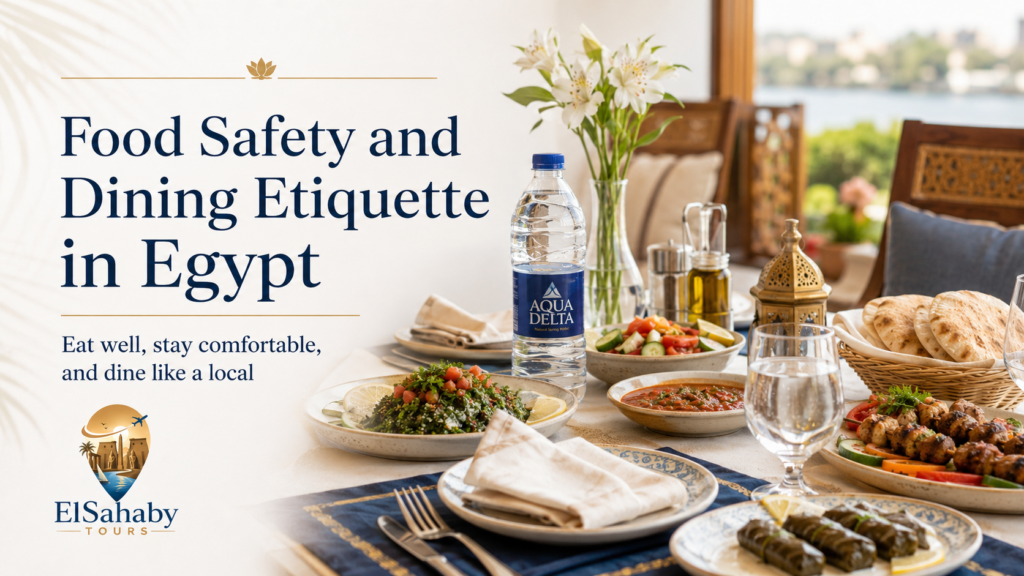
Food and Water Safety in Egypt
Trying local food should be part of your Egypt journey, but sensible precautions are important.
The Elsahaby Tours Egypt safety guide recommends choosing reputable restaurants, drinking sealed water, checking bottle seals, and being cautious with uncovered food.
Practical Food-Safety Tips
- Drink sealed bottled or properly filtered water.
- Check that the bottle seal is intact.
- Choose busy restaurants with strong turnover.
- Eat meat that is thoroughly cooked.
- Be cautious with raw salads at uncertain establishments.
- Wash or peel fruit when necessary.
- Avoid food left uncovered in strong heat.
- Introduce rich or unfamiliar foods gradually.
- Carry hand sanitizer.
- Inform restaurants about allergies.
- Keep essential medication with you.
- Stay hydrated during sightseeing.
Can You Drink Tap Water?
Many travelers prefer bottled or properly filtered water for drinking.
Tap water may be used differently by local residents, but visitors with sensitive stomachs should avoid unnecessary risk.
Ice in Drinks
At established hotels and reputable restaurants, ice is commonly made using treated water, but standards can vary.
Ask when uncertain.
Food Allergies
Travelers with serious allergies should:
- Carry translated allergy cards
- Inform hotels in writing
- Speak directly with restaurant management
- Carry emergency medication
- Avoid dishes with uncertain ingredients
- Confirm cooking oils, stocks, sauces, and garnishes
Dining Etiquette in Egypt
Egyptian hospitality is warm and generous.
Understanding a few simple customs can improve the experience.
Sharing Food
Many meals are served for sharing.
Small plates, bread, salads, dips, and grilled items may be placed in the center.
Eating with Bread
It is common to use bread to scoop food or dips.
Use a clean piece of bread each time when sharing communal dishes.
Accepting Hospitality
When invited into a home, the host may continue offering food even after you are full.
A polite refusal may need to be repeated gently.
Modest Clothing
Smart-casual clothing is suitable for most restaurants.
Luxury hotels, rooftop venues, and fine-dining restaurants may have stricter dress codes.
Alcohol
Alcohol is available in many hotels, resorts, licensed restaurants, and cruise ships, but not in every restaurant.
Confirm availability before booking when it matters to you.
Useful Arabic Phrases for Ordering Food
| English | Egyptian Arabic |
|---|---|
| Please | Law samaht / Law samahti |
| Thank you | Shokran |
| I would like this | Ana ayiz da / Ana ayza da |
| Without chili | Min gheir shatta |
| A little spicy | Shatta aleela |
| Not spicy | Mesh har |
| Without meat | Min gheir lahma |
| Without chicken | Min gheir ferakh |
| Without nuts | Min gheir mokasarat |
| I have an allergy | Andi hasaseya |
| Water, please | Maya, law samaht |
| The bill, please | El hesab, law samaht |
| Is service included? | El khedma dakhla? |
| Delicious | Gameel gedan / Taamo helw |
| How much? | Bekam? |
Pronunciation varies, and restaurant staff in major tourist areas often speak some English.
How to Add Food Experiences to Your Egypt Itinerary
Food experiences work best when integrated naturally into sightseeing.
Cairo
Combine:
- Pyramids tour with an Egyptian lunch
- Historic Cairo with traditional cafés
- Khan El Khalili with tea or dessert
- Evening Nile experience with dinner
Luxor
Combine:
- West Bank sightseeing with a local lunch
- Karnak and Luxor temples with a Nile-view dinner
- Felucca sailing with tea and snacks
Aswan
Combine:
- Philae Temple with Nubian food
- Felucca sailing with sunset tea
- Nubian village visit with a home-style meal
Red Sea
Combine:
- Boat excursion with seafood lunch
- Resort day with a beachfront dinner
- Evening marina walk with a local restaurant
Do You Need a Dedicated Food Tour?
A dedicated food tour can be valuable when it:
- Uses trusted vendors
- Explains ingredients
- Includes several small tastings
- Avoids forced shopping
- Accommodates allergies
- Introduces local neighborhoods
- Provides transportation when required
Common Mistakes Travelers Make with Egyptian Food
Ordering Too Much
Egyptian portions and shared dishes can be larger than expected.
Begin with fewer dishes and add more later.
Eating Only at Hotels
Hotel dining is convenient, but relying exclusively on it means missing much of Egypt’s culinary culture.
Choosing Empty Street-Food Stalls
High customer turnover is usually preferable when choosing prepared food.
Assuming Every Vegetarian Dish Is Vegan
Stocks, butter, ghee, eggs, and dairy may be included.
Adding All the Chili Sauce to Koshari
Taste the chili first.
Not Confirming Seafood Prices
Always confirm the price, weight, and preparation method before cooking.
Drinking Too Little Water
Heat and long sightseeing days can contribute to dehydration.
Trying Too Many Heavy Dishes at Once
Fattah, feteer, grilled meat, and rich desserts may be better experienced across separate meals.
Ignoring Allergies
Never assume a sauce, dessert, or soup is free from nuts, dairy, gluten, or meat stock.
Frequently Asked Questions About Egyptian Food
What is the most famous food in Egypt?
Koshari is one of Egypt’s most famous dishes. Ful medames, taameya, molokhia, mahshi, and grilled kofta are also widely recognized.
What do Egyptians eat for breakfast?
A traditional breakfast may include ful, taameya, eish baladi, cheese, eggs, tomatoes, cucumbers, and tea.
Is Egyptian food spicy?
Most Egyptian food is aromatic and seasoned rather than extremely spicy. Chili sauce is often served separately.
Is Egyptian food good for vegetarians?
Yes. Koshari, taameya, ful, bessara, lentil soup, and many versions of mahshi are suitable for vegetarians.
Is Egyptian food good for vegans?
Several traditional foods can be vegan, but travelers should confirm that no butter, ghee, dairy, eggs, or meat stock was used.
Can tourists eat street food in Egypt?
Yes, but choose busy, clean vendors with high turnover and food cooked thoroughly in front of you.
What is Egyptian falafel called?
Egyptian falafel is commonly called taameya and is traditionally made from fava beans.
What is Egypt’s national dish?
Koshari is frequently described as one of Egypt’s national dishes. Molokhia and ful are also central to Egyptian culinary identity.
What desserts should I try?
Try Om Ali, basbousa, konafa, roz bel laban, and zalabya.
What drinks should I try?
Popular drinks include karkade, Egyptian tea, coffee, sugarcane juice, lemon-mint juice, mango juice, and sahlab.
Is tap water safe for tourists?
Many visitors choose sealed bottled or properly filtered water for drinking.
Is seafood good in Egypt?
Seafood can be excellent in Alexandria and Red Sea destinations when ordered from busy, reputable restaurants.
How much does a local meal cost?
A simple local meal may cost only a few US dollars, while seafood, hotel dining, and fine dining cost considerably more.
Is alcohol available?
Alcohol is available in many hotels, resorts, cruises, and licensed restaurants, but not everywhere.
Should I tip in restaurants?
Tipping is common. Check whether service has already been included before adding more.
Can restaurants accommodate food allergies?
Many established restaurants and hotels can assist, but serious allergies should be explained clearly and preferably in writing.
What is the best food to try in Cairo?
Koshari, taameya, ful, hawawshi, kofta, molokhia, and traditional desserts are excellent choices.
What is the best food to try in Alexandria?
Try fresh seafood, sayadeya fish, and spicy Alexandrian liver sandwiches.
What is the best food to try in Aswan?
Look for Nubian meals, grilled chicken, fish, local bread, rice dishes, lentils, and traditional tea.
Can children eat Egyptian food?
Yes. Children may enjoy rice, grilled chicken, bread, pasta, potatoes, lentil soup, kofta, falafel, fruit, yogurt, and koshari. The Egypt Family Travel Guide provides additional family food advice.
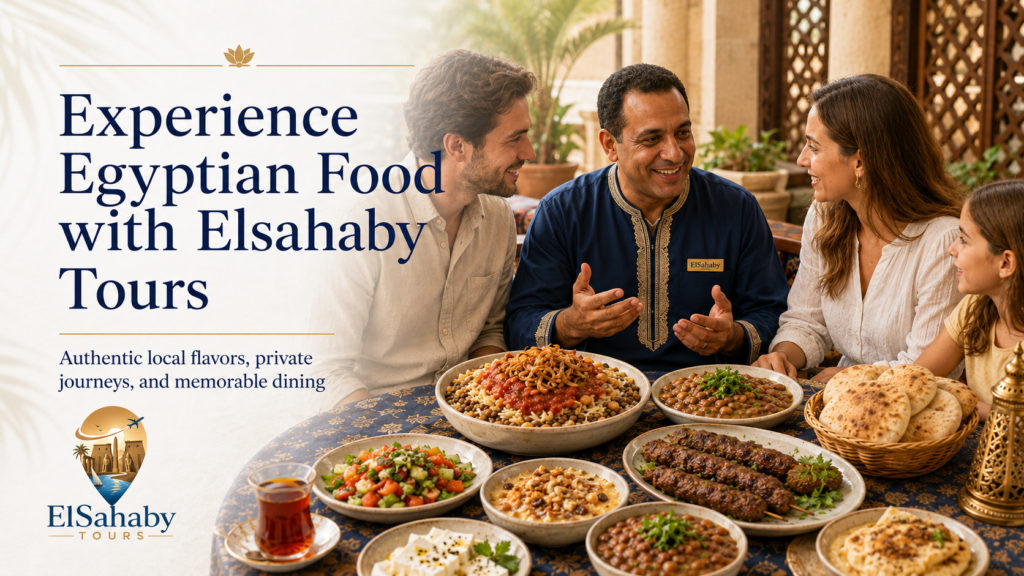
Experience Egyptian Food with Elsahaby Tours
Elsahaby Tours has been helping travelers explore Egypt since 1993.
Our customized itineraries can combine Egypt’s ancient monuments with authentic local dining experiences.
Your journey can include:
- Traditional Egyptian breakfast
- Local Cairo restaurants
- Pyramid-view dining
- Lunch during a private Luxor tour
- Nile-view restaurants
- Nubian meals in Aswan
- Seafood beside the Red Sea
- Private transportation
- Licensed Egyptologist guides
- Personalized food recommendations
- Assistance with dietary requirements
Every traveler has different preferences.
Some guests want traditional street food and local cafés. Others prefer premium restaurants, hotel dining, private meals, or carefully selected vegetarian options.
Your itinerary can be adapted according to:
- Dietary preferences
- Food allergies
- Travel dates
- Destination
- Budget
- Group size
- Preferred dining style
- Cultural interests
Learn more about our company on the About Elsahaby Tours page. Elsahaby Tours has provided customized travel planning, transportation, guiding, and continuous local assistance since 1993.
Final Thoughts
Egyptian food is more than a collection of traditional recipes.
It reflects everyday life, family gatherings, agricultural traditions, religious celebrations, regional identities, and the natural geography of the Nile Valley and Egypt’s coasts.
Begin your morning with ful and freshly fried taameya.
Try a bowl of koshari during a Cairo sightseeing day.
Share grilled kofta and warm bread after exploring Luxor.
Enjoy Nubian flavors beside the Nile in Aswan.
Order fresh seafood overlooking the Mediterranean or Red Sea.
Finish with warm Om Ali and Egyptian tea.
You do not need to try every dish during one journey.
Select a combination of breakfast, street food, traditional meals, desserts, and regional specialties. Choose reputable restaurants, communicate dietary requirements clearly, and allow food to become part of your cultural experience rather than simply a break between monuments.
With an open mind and thoughtful planning, Egyptian cuisine can become one of the most memorable parts of your trip.
Useful Links
Essential Egypt Travel Planning
- Best Time to Visit Egypt in 2026
- Is Egypt Safe to Travel in 2026?
- Egypt Visa Requirements 2026
- Egypt SIM Cards, eSIMs and Internet Guide
- Egypt Family Travel Guide
Explore Egypt
- Explore Cairo Tours
- Luxor East and West Banks Tour
- Explore Hurghada
- Red Sea Island Trips
- Explore All Egypt Tours
Book with Elsahaby Tours
- Explore Egypt Tours
- Book Private Transfers
- About Elsahaby Tours
- Elsahaby Tours Blog
- Elsahaby Tours Homepage
Official Resources
- Official Experience Egypt Gastronomy Guide
- Official Experience Egypt Culture Guide
- Official Experience Egypt Tourism Website
- Official Egypt e-Visa Portal
Plan Your Private Egypt Journey
To request a customized itinerary with carefully selected food experiences, share:
- Arrival and departure dates
- Number of travelers
- Destinations
- Hotel preference
- Approximate budget
- Dietary requirements
- Food allergies
- Preferred guide language
- Activities and experiences you want to include
Explore our Egypt tours and begin planning a private journey combining Egypt’s history, culture, local food, and unforgettable hospitality.
Explore Egypt comfortably, authentically, and at your own pace with Elsahaby Tours.