



 Egypt Travel Guide
Egypt attracts travelers with some of the world’s most remarkable historical and cultural experiences, including the Pyramids of Giza, Cairo, Luxor, Aswan, Abu Simbel, Nile cruises, the White Desert and the Red Sea.
Before booking, many travelers ask the same important question:
Is Egypt Safe to Travel in 2026?
The most accurate answer is that travel safety depends on your destination, itinerary, preparation and travel style.
Egypt is a large country, and conditions are not identical in Cairo, Luxor, Aswan, the Red Sea, Sinai, desert regions and international border areas.
Many of the country’s most popular tourism destinations are regularly included in organized itineraries. However, travelers should always review current government travel advice, avoid restricted regions and use reputable transportation, accommodation and excursion providers.
As of July 2026, the United States continues to classify Egypt as Level 2: Exercise Increased Caution, while Canada advises travelers to exercise a high degree of caution. The United Kingdom applies different warnings to specific regions rather than advising against travel to the entire country.
This guide explains:
- Safety in Cairo, Giza, Luxor and Aswan
- Regional travel warnings
- Tourist scams and how to avoid them
- Transportation safety
- Safety advice for women and solo travelers
- Family travel considerations
- Health and travel insurance
- Local laws and cultural customs
- Emergency contacts in Egypt
Elsahaby Local Advice: Do not judge the safety of all Egypt from one headline or one social-media video. Check the exact destinations in your itinerary and review the latest official advice issued for your nationality.
Quick Answer: Is Egypt Safe for Tourists?
Many travelers visit Egypt while following normal precautions, using reliable transportation and organizing remote activities through experienced local providers.
Popular tourism itineraries commonly include:
- Cairo
- Giza
- Saqqara
- Luxor
- Aswan
- Abu Simbel
- Nile cruises
- Hurghada
- Sharm El Sheikh
- Red Sea resorts
However, no destination can be guaranteed completely risk-free.
Travelers should:
- Check current government travel advice
- Avoid areas covered by official warnings
- Use reputable hotels and transportation
- Keep important belongings secure
- Avoid demonstrations and political gatherings
- Purchase suitable travel insurance
- Follow Egyptian laws and local customs
- Keep emergency contacts available
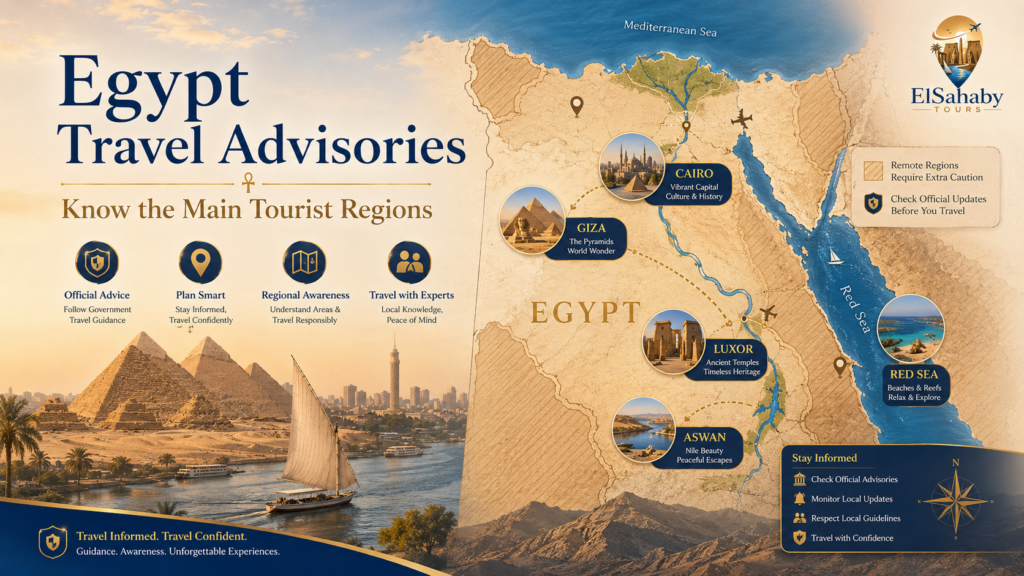
The current U.S. advisory recommends increased caution and identifies Northern and Middle Sinai, border areas and parts of the Western Desert as higher-risk regions.
Understanding Egypt Travel Advisories
Travel advisories are issued by national governments to help their citizens evaluate possible risks.
Different countries may use different classifications because they consider:
- Regional security conditions
- Consular access
- Political developments
- Medical infrastructure
- Local laws
- Transportation conditions
- Insurance implications
The current general classifications include:
| Country | Current General Advice |
|---|---|
| United States | Exercise Increased Caution |
| Canada | Exercise a High Degree of Caution |
| United Kingdom | Regional warnings apply to specific areas |
The UK guidance was still current on 14 July 2026 and contains separate restrictions for North Sinai, parts of South Sinai, some border areas and sections of the Western Desert.
Before confirming your trip:
- Read your government’s latest Egypt travel advice.
- Check every city and region on your itinerary.
- Confirm that your insurance covers the destination.
- Review airline and border updates.
- Check again shortly before departure.
Important: Government travel advice may change. Always review the latest official version rather than relying on an old article, screenshot or social-media post.
Which Areas of Egypt Require Additional Caution?
Egypt covers a large geographic area.
Conditions in Cairo, Luxor and Aswan should not automatically be considered the same as conditions in remote border regions.
North and Middle Sinai
Several governments advise against travel to parts of Northern and Middle Sinai because of security risks.
The United States currently advises against travel to Northern and Middle Sinai. The United Kingdom advises against all travel to North Sinai and applies additional restrictions to parts of northern South Sinai.
Travelers planning to visit destinations in Sinai should check the exact location rather than treating the entire peninsula as one area.
Destinations may include:
- Sharm El Sheikh
- Dahab
- Nuweiba
- Taba
- St. Catherine
Check the latest official advice for each destination and route before travel.
Egypt’s International Border Areas
Some border regions are military or restricted areas.
Travel close to borders with Libya, Sudan and parts of Sinai may be subject to additional security rules and movement restrictions. The current U.S. advisory advises against travel to Egyptian border areas.
Do not enter remote border or desert areas without checking:
- Permit requirements
- Approved routes
- Current security restrictions
- Local authority guidance
The Western Desert
The Western Desert is enormous, and travel advice differs depending on the specific destination and route.
The U.S. advisory states that travelers should avoid Western Desert travel unless using a professionally licensed tour company.
The UK guidance provides exceptions for several recognized tourism destinations and routes, including the White Desert, Black Desert, Bahariya, Farafra, Siwa and selected oasis roads.
Canada applies regional warnings but also lists certain desert destinations and official routes as exceptions where travelers should exercise a high degree of caution.
Desert Travel Safety Tips
- Use an experienced local operator.
- Travel on approved routes.
- Check permit requirements.
- Use suitable vehicles.
- Carry sufficient water.
- Keep emergency contacts available.
- Do not leave approved routes.
- Avoid independent off-road travel.
Elsahaby Local Advice: The White and Black Deserts should be treated as organized expeditions, not casual self-drive destinations.
Is Cairo Safe for Tourists?
Cairo is a large, energetic capital with busy roads, crowded neighborhoods, major museums, historic districts and modern urban areas.
Visitors commonly spend time in:
- Downtown Cairo
- Zamalek
- Garden City
- Historic Cairo
- Giza
- New Cairo
- The Egyptian Museum area
- The Grand Egyptian Museum area
The UK government states that Egypt’s general crime rate is relatively low but advises visitors to take sensible precautions.
Common concerns for visitors are often related to:
- Heavy traffic
- Busy streets
- Tourist scams
- Unofficial services
- Overcharging
- Persistent sellers
- Keeping belongings secure
Cairo Safety Tips
- Keep your phone secure near busy roads.
- Use trusted ride-hailing applications or pre-booked transfers.
- Avoid carrying unnecessary cash.
- Confirm prices before accepting services.
- Keep your hotel address available offline.
- Allow additional travel time because of traffic.
- Avoid demonstrations and political gatherings.
- Use official entrances and ticket counters.
Elsahaby Local Advice: Cairo can feel intense because of its size, traffic and energy. Good transportation and a carefully planned itinerary make the city much easier to explore.
Is Giza Safe for Tourists?
The Giza Pyramids are among Egypt’s best-known attractions.
Visitors may encounter:
- Camel and horse ride offers
- Unofficial guides
- Souvenir sellers
- Requests for tips
- Unclear pricing
Government safety guidance warns travelers to remain cautious around scammers and touts in tourist areas.
Before accepting a service, confirm:
- The total price
- Whether the price is per person
- The duration
- The route
- What is included
- Whether waiting time is included
- Whether tipping is optional
Do not hand your passport, phone or wallet to an unknown person.
Elsahaby Local Advice: A pre-arranged private guide can reduce unnecessary negotiations and allow you to focus on the history and experience.
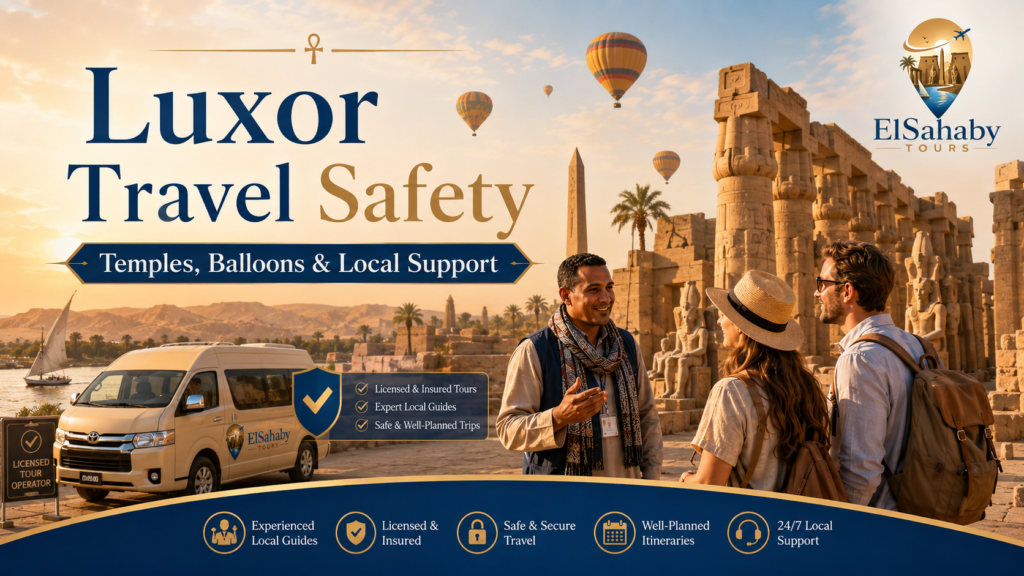
Is Luxor Safe for Tourists?
Luxor is one of Egypt’s most important tourism destinations.
Popular attractions include:
- Karnak Temple
- Luxor Temple
- Valley of the Kings
- Hatshepsut Temple
- Valley of the Queens
- Medinet Habu
- Nile cruises
- Hot air balloon flights
The UK travel guidance notes that Egyptian authorities maintain a significant security presence and additional measures at tourist sites.
Luxor Safety Tips
- Use licensed tourism transportation.
- Carry water during archaeological visits.
- Begin summer sightseeing early.
- Keep entrance tickets until leaving.
- Use reputable balloon operators.
- Follow all balloon safety instructions.
- Avoid isolated areas late at night.
- Confirm horse-carriage prices in advance.
Useful Elsahaby Tours pages:
Elsahaby Tours currently offers Luxor sightseeing experiences and sunrise hot-air-balloon arrangements.
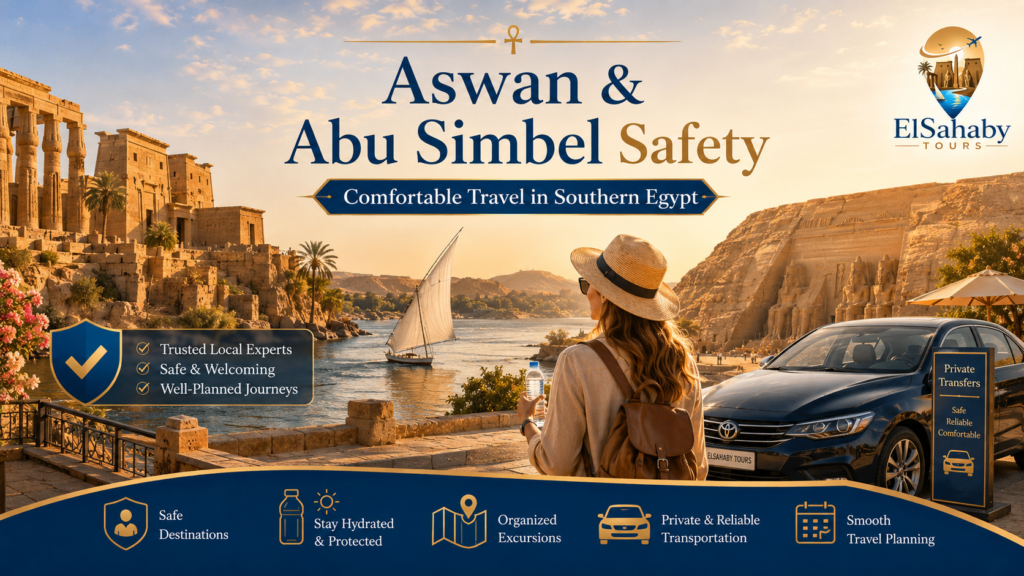
Is Aswan Safe for Tourists?
Aswan is known for its Nile scenery, temples and slower travel atmosphere.
Popular experiences include:
- Philae Temple
- Aswan High Dam
- Unfinished Obelisk
- Felucca sailing
- Nubian Village
- Abu Simbel excursions
Aswan Safety Tips
- Use reputable boat providers.
- Agree on felucca prices and duration before departure.
- Carry water during warm months.
- Use organized transportation for Abu Simbel.
- Keep hotel and driver details available.
- Avoid remote areas without local guidance.
Explore:
Private Day Tour to Philae Temple, High Dam and the Unfinished Obelisk
The current Elsahaby Tours itinerary includes hotel transportation and optional Egyptologist guiding for these major Aswan attractions.
Is Abu Simbel Safe to Visit?
Abu Simbel is one of Egypt’s most remarkable archaeological destinations.
Travelers commonly visit from Aswan by:
- Private car
- Tourist minibus
- Organized group excursion
- Domestic flight
Because the journey is long, reliable transportation is important.
Abu Simbel Travel Tips
- Confirm the pickup time in advance.
- Depart early.
- Carry identification.
- Bring water.
- Use sun protection.
- Choose air-conditioned transportation.
- Stay on established routes.
- Avoid unplanned desert detours.
Elsahaby Local Advice: Comfort and driver experience are particularly important for the Aswan–Abu Simbel journey.
Are Nile Cruises Safe?
Nile cruises are a popular way to travel between Luxor and Aswan.
Typical cruise routes may include:
- Luxor
- Edfu
- Kom Ombo
- Aswan
Before booking, confirm:
- Vessel name
- Cruise duration
- Departure schedule
- Cabin category
- Deck location
- Included meals
- Included excursions
- Guide language
- Safety procedures
Use a reputable cruise provider and follow onboard instructions.
Explore:
Nile Cruise from Luxor to Aswan
Is Egypt Safe for Solo Travelers?
Many solo travelers explore Egypt independently or combine independent travel with organized services.
Solo travel usually requires additional planning.
Solo Travel Safety Advice
- Share your itinerary with someone you trust.
- Use reputable accommodation.
- Avoid isolated places late at night.
- Keep your phone charged.
- Carry a power bank.
- Save emergency contacts.
- Arrange transportation for very early or late arrivals.
- Keep digital copies of important documents.
- Use organized tours for remote destinations.
The U.S. advisory recommends keeping travel documents current and copies easily accessible.
A practical travel style may combine:
- Independent city exploration
- Private airport transfers
- Guided archaeological tours
- Organized desert excursions
- Scheduled long-distance transportation
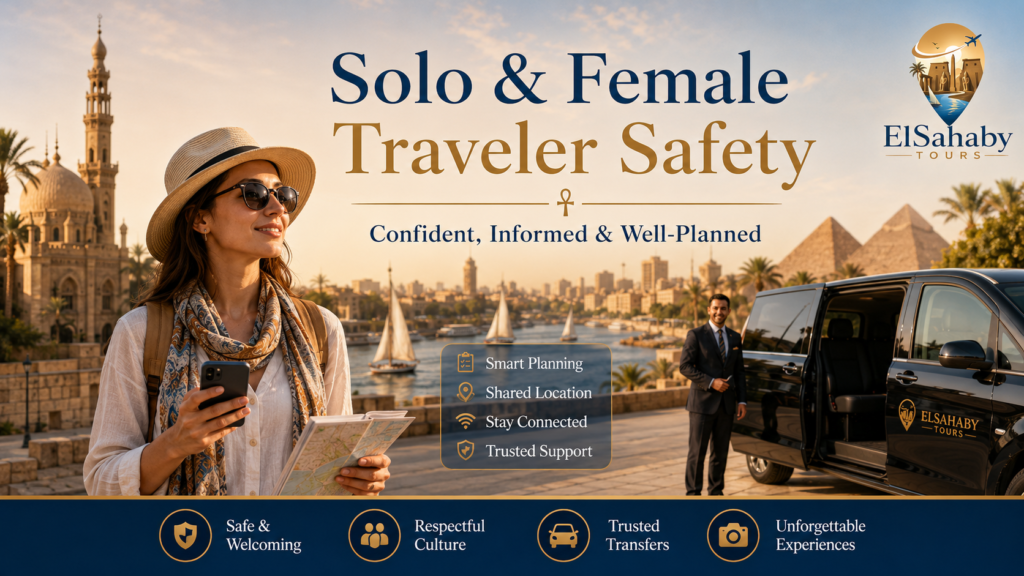
Is Egypt Safe for Female Travelers?
Many women travel in Egypt independently, with friends or through organized tours.
Additional precautions are recommended, particularly when traveling alone.
The UK advises female travelers to exercise caution when alone, especially at night and in taxis. It also recommends using reputable providers and sharing trip details, driver information and live location when necessary.
Practical Advice for Women
- Use trusted transportation.
- Sit in the rear seat of taxis.
- Share your live location when traveling alone.
- Avoid isolated places late at night.
- Do not share your hotel room number with strangers.
- Be clear and direct when refusing unwanted attention.
- Ask hotel staff or your tour provider for assistance.
- Research excursion providers before booking.
What Should Women Wear in Egypt?
Tourists are not required to wear traditional clothing.
Comfortable choices include:
- Loose trousers
- Long skirts
- T-shirts
- Light long-sleeved shirts
- Comfortable walking shoes
At religious sites:
- Cover shoulders.
- Cover knees.
- Carry a light scarf when appropriate.
- Follow local instructions.
Is Egypt Safe for Families?
Egypt can provide memorable family experiences.
Children may enjoy:
- The Pyramids
- Museums
- Camel experiences
- Nile sailing
- Desert scenery
- Red Sea resorts
- Historical temples
Family Travel Safety Tips
- Keep children close in crowded areas.
- Do not leave children unattended.
- Request suitable vehicle arrangements in advance.
- Ask about child seats when needed.
- Avoid long outdoor visits during peak summer heat.
- Carry water and snacks.
- Include rest periods.
- Keep essential medicine in hand luggage.
UK guidance specifically recommends not leaving children unaccompanied.
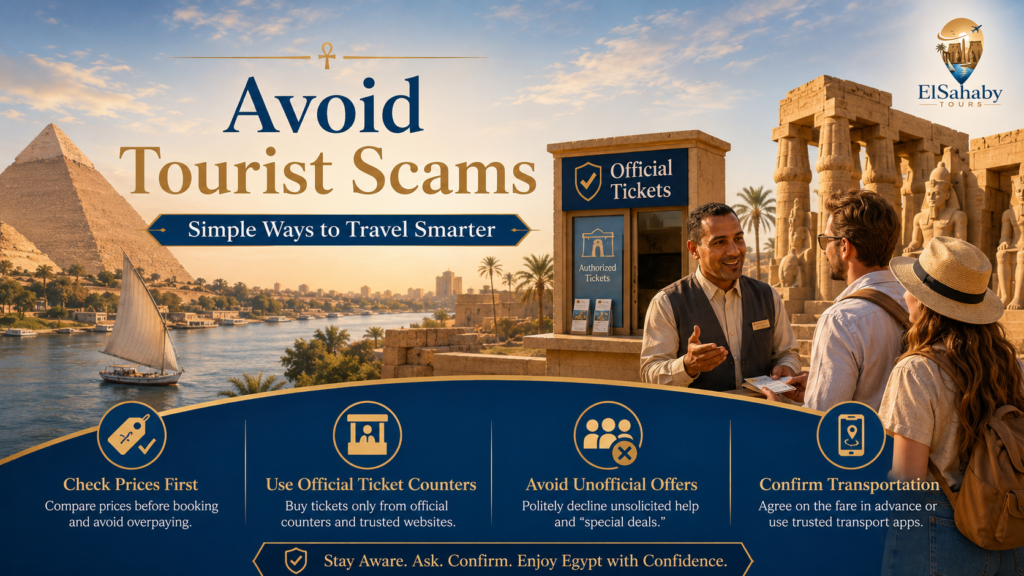
Common Tourist Scams in Egypt
Most local interactions are friendly, but visitors should understand common tourist-area situations.
These may include:
- Unclear taxi prices
- Unofficial guiding
- “Free” gifts followed by payment requests
- Pressure to enter shops
- Inflated camel or horse prices
- Claims that an entrance is closed
- Requests for excessive tips
- Unofficial ticket assistance
How to Avoid Problems
- Confirm the total price first.
- Ask whether the price is per person.
- Use official ticket counters.
- Do not pay before the terms are clear.
- Politely but firmly decline unwanted offers.
- Avoid lengthy arguments.
- Use licensed guides and reputable providers.
The U.S. advisory warns visitors about overcharging and scams in tourism areas.
Elsahaby Local Advice: A polite “No, thank you” is usually enough. Continue walking without beginning a long negotiation.
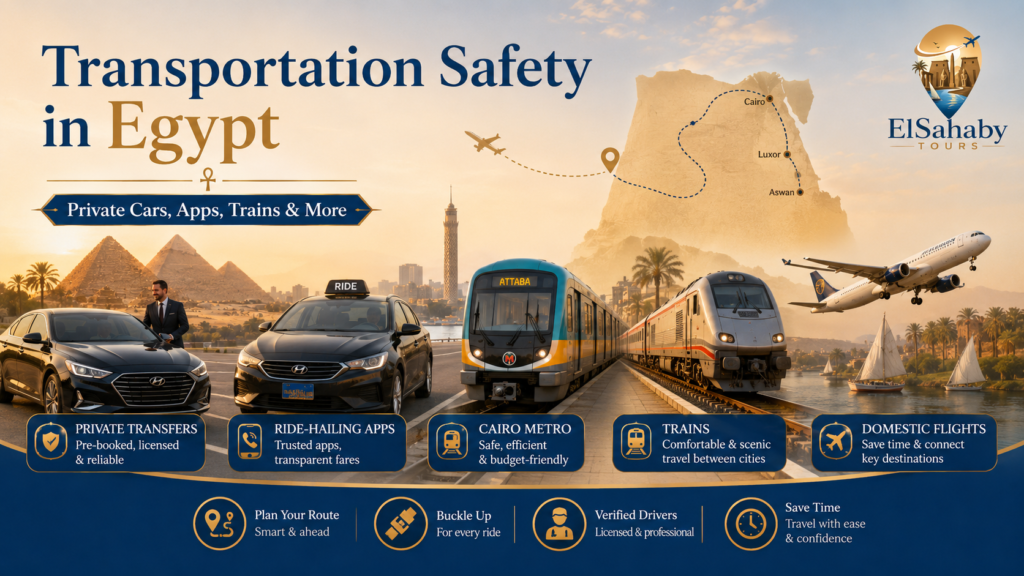
Transportation Safety in Egypt
Transportation options vary by destination.
Travelers may use:
- Private cars
- Uber
- Careem
- Taxis
- Cairo Metro
- Trains
- Intercity buses
- Domestic flights
- Nile boats
Private Transportation
Private transfers are useful for:
- Airport arrivals
- Families
- Travelers with luggage
- Early departures
- Multi-city routes
- Long-distance travel
Benefits may include:
- Confirmed pickup
- Direct transportation
- Air-conditioned vehicles
- Local assistance
- Flexible timing
Explore:
Elsahaby Tours Private Transfers
Elsahaby Tours currently provides private and small-group transportation services through its transfer section.
Ride-Hailing Applications
Ride-hailing applications may be useful in supported cities.
Before entering the vehicle:
- Check the license plate.
- Confirm the driver’s name.
- Match the vehicle model.
- Review the pickup location.
- Share trip details when traveling alone.
- Keep personal belongings with you.
Local Taxis
Before beginning a taxi journey:
- Ask whether the meter is being used.
- Agree on the price when necessary.
- Carry small cash notes.
- Follow the route on your phone.
- Avoid entering an unmarked vehicle.
Trains
Train services connect several major Egyptian cities.
Comfort and service may vary according to:
- Train type
- Class
- Route
- Departure time
Canada advises travelers to exercise additional caution because rail safety standards vary.
Microbuses
Microbuses are common in local transportation.
They may be inexpensive, but they are not always the easiest option for first-time international visitors.
Canada’s travel advice recommends avoiding microbuses because of driving and road-safety concerns.
Ferries and Boats
Use reputable operators and follow safety instructions.
Before boarding:
- Confirm the destination.
- Check the agreed price.
- Follow capacity and safety guidance.
- Keep children supervised.
- Avoid unsafe or overcrowded boats.
Canada advises travelers to use reputable ferry operators because safety standards may vary.
Road Safety in Egypt
Traffic may feel different from what visitors experience at home.
Possible challenges include:
- Heavy traffic
- Frequent lane changes
- Limited pedestrian crossings
- Busy city roads
- Variable road conditions
- Different driving habits
Road Safety Advice
- Wear a seat belt when available.
- Use experienced local drivers.
- Cross major roads carefully.
- Avoid looking at your phone while crossing.
- Allow additional travel time in Cairo.
- Avoid driving immediately after a long flight.
- Plan remote journeys during daylight when possible.
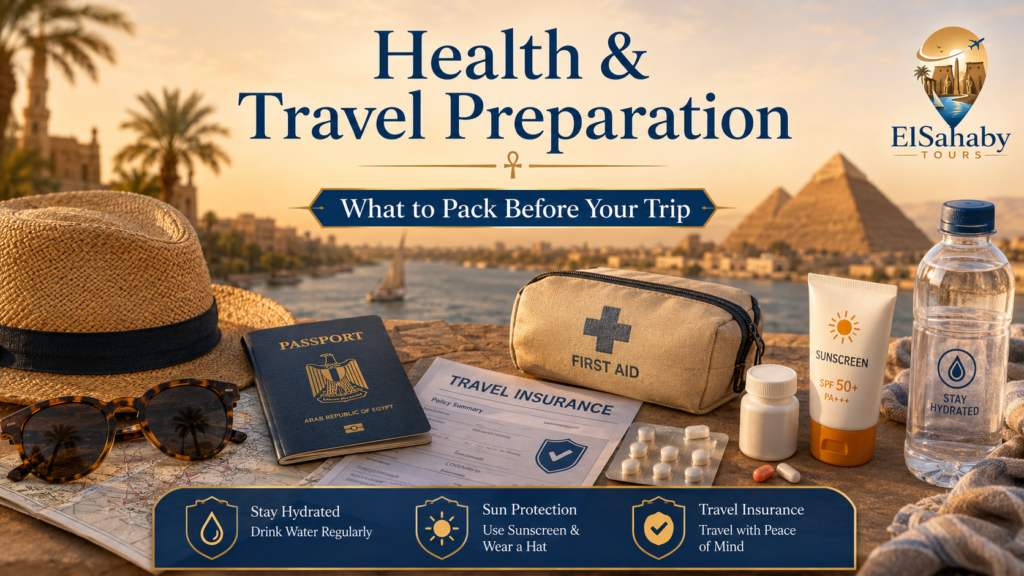
Health and Medical Preparation
Travelers should prepare for:
- Heat
- Sun exposure
- Dehydration
- Long walking days
- Changes in food and routine
The UK advises travelers to obtain insurance covering local treatment and possible emergency medical evacuation. It also recommends reviewing current health and vaccination advice before travel.
Before Traveling
- Review current health recommendations.
- Purchase suitable travel insurance.
- Bring essential prescription medication.
- Carry sunscreen.
- Pack basic first-aid supplies.
- Keep medical information accessible.
- Carry medication in its original packaging.
Some medicines may be regulated differently in Egypt, so travelers carrying prescription medication should review current requirements and carry supporting documentation.
Food and Water Safety
Egyptian food is an important part of the travel experience.
Popular dishes include:
- Koshari
- Falafel
- Ful medames
- Molokhia
- Grilled meats
- Fresh Egyptian bread
Practical Advice
- Drink sealed bottled water.
- Check the bottle seal.
- Choose busy restaurants with good food turnover.
- Wash or peel fresh fruit.
- Carry hand sanitizer.
- Introduce unfamiliar food gradually.
Local Laws and Cultural Customs
Egypt is predominantly Muslim and has conservative social traditions.
Visitors should respect:
- Religious customs
- Local traditions
- Photography restrictions
- Ramadan practices
- Dress expectations at religious sites
- Laws relating to political activity
UK guidance recommends respecting local traditions and exercising additional cultural sensitivity during Ramadan and when visiting religious locations.
Photography Rules in Egypt
Egypt offers excellent photography opportunities.
However, some locations may have restrictions.
Avoid photographing:
- Military facilities
- Police facilities
- Security checkpoints
- Restricted government buildings
- Sensitive infrastructure
At archaeological sites:
- Follow displayed signs.
- Ask staff when uncertain.
- Check whether special photography tickets are required.
- Avoid flash when prohibited.
- Respect restrictions inside tombs and museums.
Avoid Demonstrations and Political Gatherings
Travelers should avoid:
- Demonstrations
- Political gatherings
- Public protests
- Unexpected large crowds
Both U.S. and UK advice recommend avoiding protests because situations may change quickly and political activity can create legal risks.
Keep Your Documents Safe
Keep access to:
- Passport
- Visa information
- Travel insurance
- Flight details
- Hotel confirmation
- Tour bookings
Store secure digital copies separately from the original documents.
UK guidance recommends keeping copies of passports, visas and travel documents separately from the originals.
Emergency Contacts in Egypt
Save important contact details before traveling.
Tourist Police
126The UK government currently lists 126 as the tourist police number in Egypt.
Ambulance
123The UK government lists 123 as the emergency ambulance number.
Also save:
- Your embassy
- Hotel reception
- Travel insurance provider
- Tour company
- Driver
- Emergency family contact
Elsahaby Local Advice: Save your hotel name and address in both English and Arabic and keep a screenshot available offline.
Egypt Safety Checklist Before Travel
✅ Check current government travel advice.
✅ Purchase appropriate travel insurance.
✅ Confirm accommodation.
✅ Arrange airport transportation.
✅ Save emergency contacts.
✅ Keep copies of your passport and visa.
✅ Download offline maps.
✅ Bring essential medication.
✅ Share your itinerary with family.
✅ Confirm desert tours with experienced local providers.
Egypt Safety Checklist During Your Trip
✅ Keep valuables secure.
✅ Use reputable transportation.
✅ Carry water.
✅ Avoid demonstrations.
✅ Confirm prices before accepting services.
✅ Follow local laws.
✅ Respect religious customs.
✅ Keep your phone charged.
✅ Use official guides and ticket offices.
✅ Follow advice from trusted local professionals.
Need Help Planning a Safe and Comfortable Egypt Trip?
Elsahaby Tours can assist with:
- Cairo Airport transfers
- Private transportation
- Cairo and Giza tours
- Luxor sightseeing
- Aswan tours
- Abu Simbel transportation
- Nile cruises
- Hot air balloon experiences
- White and Black Desert trips
- Customized itineraries
- Local travel assistance
Our aim is to help travelers explore Egypt with:
- Comfortable transportation
- Flexible planning
- Local knowledge
- Clear communication
- Personalized support
Contact Elsahaby Tours
Request a Customized Egypt Itinerary
Chat with Elsahaby Tours on WhatsApp
The current Elsahaby Tours contact page lists its WhatsApp contact, email and local contact information.
Frequently Asked Questions
Is Egypt safe to travel in 2026?
Many travelers continue to plan visits to Egypt, but safety depends on the destinations included in the itinerary. Travelers should review current government advice, avoid restricted regions and follow normal safety precautions. The current U.S. advisory is Level 2, while Canada advises a high degree of caution and the UK applies regional restrictions.
Is Cairo safe for tourists?
Cairo is a major international city. Visitors should remain aware of traffic, crowds, scams and personal belongings and use trusted transportation.
Is Luxor safe for tourists?
Luxor is a major tourism destination with visible security at important archaeological sites. Use reputable transportation and professional excursion providers.
Is Aswan safe for tourists?
Aswan is included in many classic Egypt itineraries. Travelers should use organized transportation for longer journeys and reputable providers for boat trips.
Is Egypt safe for female travelers?
Many women travel in Egypt. Additional precautions are recommended when traveling alone, especially late at night and when using taxis.
Is Egypt safe for solo travelers?
Solo travel is possible with preparation. Use reputable accommodation, reliable transportation and organized services for remote destinations.
Is it safe to visit the Pyramids?
The Pyramids are a major tourist attraction. Common visitor concerns are often related to persistent sellers, unofficial services and unclear prices.
Is the White Desert safe?
Official advice differs by nationality and route. Organized travel with an experienced local provider is important. The U.S. specifically advises using a professionally licensed tour company for Western Desert travel.
Should I buy travel insurance for Egypt?
Yes. Insurance should cover your destinations, medical treatment, planned activities and possible emergency assistance.
What should tourists avoid in Egypt?
Avoid restricted regions, political demonstrations, unclear unofficial services, unauthorized desert travel and photographing sensitive security locations.
Official Sources and Useful Links
- United States Department of State – Egypt Travel Advisory
- United Kingdom – Egypt Travel Advice
- United Kingdom – Egypt Safety and Security
- United Kingdom – Egypt Health Advice
- Government of Canada – Egypt Travel Advice
- Elsahaby Tours
- Elsahaby Tours – Egypt Tours
- Elsahaby Tours – Private Transfers
- Elsahaby Tours – Luxor Tours
- Elsahaby Tours – Hot Air Balloon
- Elsahaby Tours – Contact Us

Egypt Tourism News 2026: Latest Travel Updates, New Attractions & Tourism Developments - Elsahaby Tours
July 25, 2026 - 5:25 pm[…] Is Egypt Safe to Travel in 2026? […]