
 Luxor
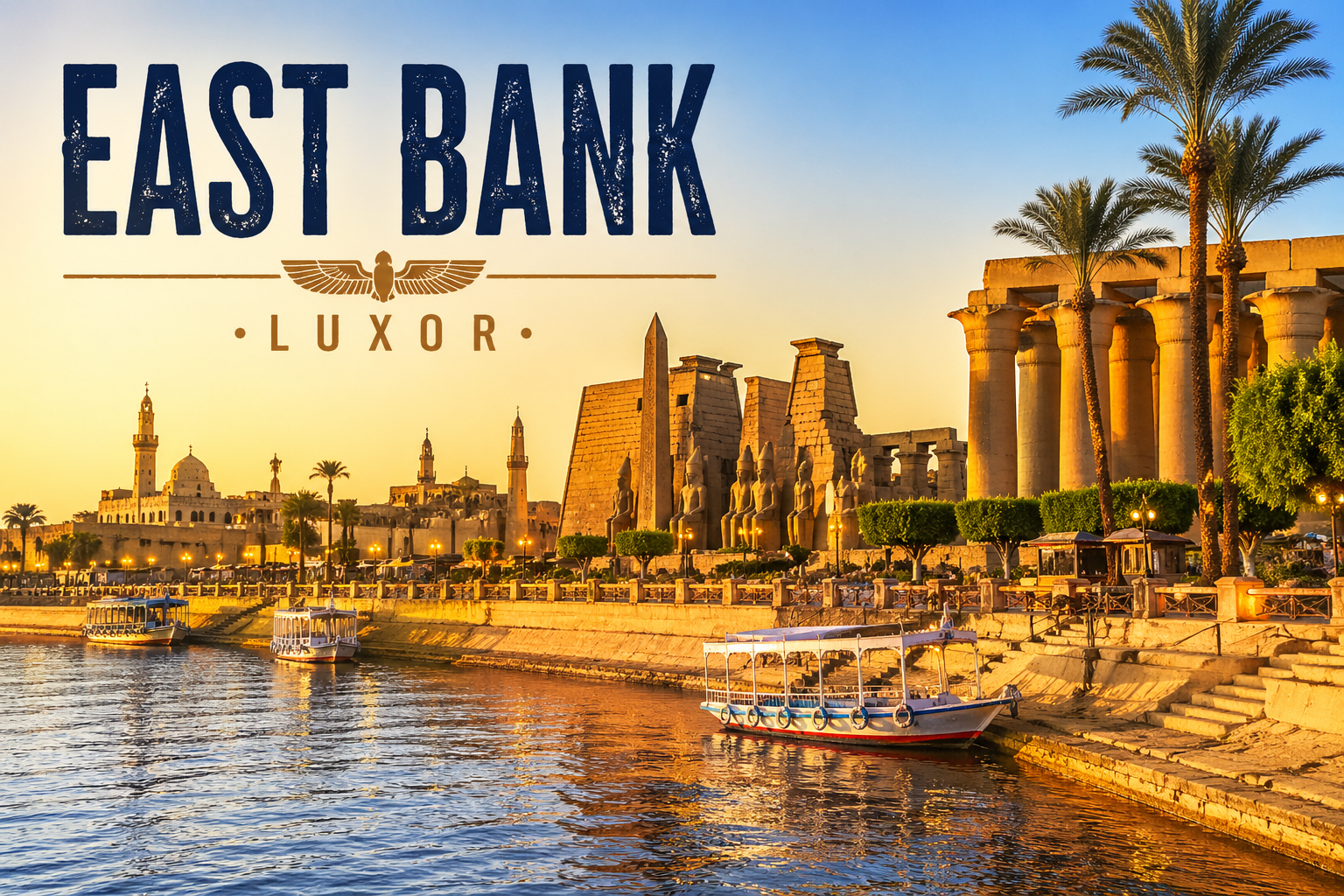
LuxorMake sure your phone is fully charged because the pictures will be epic! First up, a morning or afternoon on the East Bank touring the Karnak Temple Complex and Luxor Temple, part of the wider area of ancient Thebes and one of the seven UNESCO World Heritage Sites located in Egypt. You’ll be able to complete a thorough exploration of both, which are situated 2.5 km from each other, in approximately 4–5 hours.

Karnak Temple Complex
Considered ancient Egypt’s most sacred site, the temples of Karnak are a multi-generational effort in temple building, combining over 2,000 years of diverse craftsmanship and creative flourish. Imagine the result when 30 different pharaohs throw their personalities into one space in a bid for immortality.
Originally built as a cult temple dedicated to the god Amun and his family, the Karnak Temple Complex expanded over centuries to become one of the largest and most well-preserved religious sites of the ancient world, spanning more than 100 ha.

Luxor Temple
Luxor Temple is one of the most beautiful, well-preserved, and oldest temples in Luxor. The ancient Egyptians believed that it was “the Place of the First Occasion” or “Creation,” marking the spot where the god Amun-Ra was born, and the whole world with him, at the beginning of time.
Unlike other temples, Luxor Temple wasn’t built solely for worshiping a god; it was also a place to renew the powers of the ruling king. Pharaohs would arrive to Luxor Temple from Karnak in the annual Opet Festival procession to restore their powers and reaffirm their royal status.
While the core of the temple and the court fronting it were built by Amenhotep III, Ramesses II had a huge impact on the design as it appears today, adding the monumental pylon at the front carved with inscriptions telling the tale of his military triumphs. Its doorway is flanked by two towering obelisks (one of which is still in place) and enormous statues of Ramesses in various stances. More colossal statues of this great king adorn the courtyard he built just behind the pylon.
Luxor Temple isn’t just a holy site that was meaningful to the ancient Egyptians. In the early 4th century, one chamber was repurposed for the imperial Roman cult, a church was built in Ramesses II’s court in the 6th century, and a mosque was later erected to commemorate the Muslim scholar Abu al-Haggag.

Museums
Karnak and Luxor Temples may be the crown jewels of the East Bank, but there are a couple of other places worth visiting. Stop by the Luxor Museum to see select artifacts from the tomb of Tutankhamun. Then prepare to be amazed by mummified cats and crocodiles at the Mummification Museum, which gives you a comprehensive look into the ritual and significance of the mummification process, including a closer look at the many ancient tools, objects, and equipment used to prepare bodies for the afterlife.

Traditional Markets
Looking for a keepsake from your unforgettable trip? Located across the street from Luxor Temple on the East Bank is the Luxor Market, or “the souq,” known for its alabaster, jewelry, traditional fabrics, and aromatic spices. Shopkeepers can often speak a dozen languages! Banter and accept their offer of a drink—it’s usually delicious!